from 35mm to dcp - how do they rob us of our innocence

filmstock

Member
ANd so the question begins with what will have to be regarded as follows - and you'll be shocked at what came next - read on:


hi I was just wondering about the current shift to digital projectors playing digitised motion pictures instead of spools of 35 mm negative - how (as in what is the exact process) is it that 35 mm negative are converted into digital files - and isn't it more than likely that all the quality of the image will be downgraded in the process?
 
Last edited:
Well it is different. But not necessarily downgraded. In fact, it can be better than a film projection. It can also be worse. This is sort of like asking if an analog LP album is better than a CD. Some will swear by the LP. If you're into guitars, there are people that swear by tubes rather than transistors for their amplifiers. Technically, digital is superior to film if the proper quality steps are taken, but they can be worse. There is also an esthetic that you may prefer with film projection

There are several factors that can control both film projection and digital projection. So which is best depends upon quality control. I'm no expert, but here's some thoughts.

1. The transfer process. First, let's be clear about terms. You said 'instead of 35mm negative.'. Negatives are never projected. A positive print is made from the negative. That is what is projected. This is the first point of loss in a traditional film projection. The print is not as good as the original negative. It's close, but it has its own grain added to the original grain of the negative. Digital scanning does not add grain.

A digital scan from the negative can be as good as the negative if the scan is properly done. So a digital 'print' can be better than a film print.

2. The projection - Assuming the projector is as good as the film scanner, then the digital projection will be a better presentation of the original negative than print film. But again, there are quality control factors that may make digital projection worse than film

3. Shake - During the scanning process, the print process, and the projection process, the frame can move around because the alignment of the sprocket holes are not carefully controlled. Normally, during scanning, this is carefully aligned. But during projection, the frame can wander around quite a bit. This will not happen with a digital projection.

4. The scratches - film prints get scratched as they are projected. They get dirty. Digital does not.

All-in-all, technically, the digital projection has the capability of being a superior presentation over film if the proper steps are taken.
 
The majority of acquisition for movie production has gone digital, and those that still acquire on film then do a high quality scan then work digitally. I don't see what the big deal is, people have been using digital intermediaries for quite some time now, and the quality of playback from a 4K projector is much higher quality than an old 35mm projector.

All the Best!

Dave


Well, Paul beat me too it.

Well, old is not really important when it comes to projectors. As long as the bulb is properly replaced, the lens is properly kept clean, and the film print is proper, the thing only really needs to run at 24fps and it's all good. The VAST majority of theaters are not 4K as of right now. Also, one must not assume film is 4k or less. Many fine grained film prints (and especially if watching an inter-positive) can out resolve 4k, imo. That might be true with older or looser stocks, but VisionIII 50d is packed tight with grain and grain is essentially to resolution as pixels are. (Very simplified statement I know).


I just watched a film called Samsara, in 4k projection. But it was shot in 70mm!!! I could not find a 70mm screening in LA, and that is because there wasn't one offered. What a damn shame and for the life of me I don't know why!! 70mm (not IMAX) is 4x the resolution of equivalent stock cut to 35mm. I think 4k is the only resolution that does film any justice at all (2k is nice, but common, it's no film print) and that is because film prints can have more poor quality when they are perhaps near the end of a print cycle or something.

Point is, there is no excuse for shooting a 70mm film and showing it primarily in 2k with the exception of some 4k screenings. The screening of Samsara I went to had the director, producer and composer there, and I wish I would have asked them why there wasn't a 70mm print. That said, the 4k screening was pretty fantastic looking... was the first film projected on the brand new projector and the Landmark was happy to show it off.

Anyhow, oddly enough, the screening I watched of their previous film, Baraka, was a 70mm print... but not just any print... I just so happened, at the screening, I sat in front of an ASC member I recognized. I struck up a conversation and he told me the print we were about to see was an interpositive. And boy!!! To this day I've never seen anything as magnificent as the 70mm interpositive of Baraka. Despite how amazing Samsara was in 4k, it was not the same as 70mm. Again, at that screening, the producer and director of the film did a QnA.

Wished i would have asked.
 
Well it is different. But not necessarily downgraded. In fact, it can be better than a film projection. It can also be worse. This is sort of like asking if an analog LP album is better than a CD. Some will swear by the LP. If you're into guitars, there are people that swear by tubes rather than transistors for their amplifiers. Technically, digital is superior to film if the proper quality steps are taken, but they can be worse. There is also an esthetic that you may prefer with film projection

There are several factors that can control both film projection and digital projection. So which is best depends upon quality control. I'm no expert, but here's some thoughts.

1. The transfer process. First, let's be clear about terms. You said 'instead of 35mm negative.'. Negatives are never projected. A positive print is made from the negative. That is what is projected. This is the first point of loss in a traditional film projection. The print is not as good as the original negative. It's close, but it has its own grain added to the original grain of the negative. Digital scanning does not add grain.

A digital scan from the negative can be as good as the negative if the scan is properly done. So a digital 'print' can be better than a film print.

2. The projection - Assuming the projector is as good as the film scanner, then the digital projection will be a better presentation of the original negative than print film. But again, there are quality control factors that may make digital projection worse than film

3. Shake - During the scanning process, the print process, and the projection process, the frame can move around because the alignment of the sprocket holes are not carefully controlled. Normally, during scanning, this is carefully aligned. But during projection, the frame can wander around quite a bit. This will not happen with a digital projection.

4. The scratches - film prints get scratched as they are projected. They get dirty. Digital does not.

All-in-all, technically, the digital projection has the capability of being a superior presentation over film if the proper steps are taken.

A digital print, if scanned from the 35mm negative, CAN be better than a photo-chemical 35mm print, because that print has suffered from generational quality loss. If the film print you watch in Topeka Kansas is the 1,000th struck from an inter-negative (throwing out a number... I don't know how many is too many), than yes, I can see that being very true. Does not mean the scan is out resolving the negative though. It's just out resolving the 1,000th dupe of a dupe of a dupe, etc.

Otherwise, I agree on almost all points. The key is if done properly.

Film, IMO should always be scanned, DI'd, and projected at 4k or above. If 70mm, 8k or above. Otherwise watching a good film print, if also taken care of, brand new and projected properly can be better.
 
I just watched a film called Samsara, in 4k projection. But it was shot in 70mm!!! I could not find a 70mm screening in LA, and that is because there wasn't one offered. What a damn shame and for the life of me I don't know why!! 70mm (not IMAX) is 4x the resolution of equivalent stock cut to 35mm. I think 4k is the only resolution that does film any justice at all (2k is nice, but common, it's no film print) and that is because film prints can have more poor quality when they are perhaps near the end of a print cycle or something.

Point is, there is no excuse for shooting a 70mm film and showing it primarily in 2k with the exception of some 4k screenings. The screening of Samsara I went to had the director, producer and composer there, and I wish I would have asked them why there wasn't a 70mm print. That said, the 4k screening was pretty fantastic looking... was the first film projected on the brand new projector and the Landmark was happy to show it off.

Anyhow, oddly enough, the screening I watched of their previous film, Baraka, was a 70mm print... but not just any print... I just so happened, at the screening, I sat in front of an ASC member I recognized. I struck up a conversation and he told me the print we were about to see was an interpositive. And boy!!! To this day I've never seen anything as magnificent as the 70mm interpositive of Baraka. Despite how amazing Samsara was in 4k, it was not the same as 70mm. Again, at that screening, the producer and director of the film did a QnA.

Wished i would have asked.

Ah, 70mm. My local cinematheque holds a couple of 70mm screenings each year (only blow-ups so far). Besides Apocalypse Now, which was on pre '82 70mm (when they made a better lasting process) which showed aged and some pink fading, the other screenings I've seen in 70mm (Aliens, Batman and E.T.) have all been crisp and clear. Even being blow-ups the resolution is insane. The grain is very fine, with amazing sharpness. The prints had close to no aging, all the films looking as if they could have been released today.
 
so is the digital scan made on the positive print of the negative,

Or just the negative

appreciate your thought provoking answers thanks so far
 
actually dont answer that i see now that its just a scan of the negative,

but if you could explain the scanning process that would be fascinating
 
A digital print, if scanned from the 35mm negative, CAN be better than a photo-chemical 35mm print, because that print has suffered from generational quality loss. If the film print you watch in Topeka Kansas is the 1,000th struck from an inter-negative (throwing out a number... I don't know how many is too many), than yes, I can see that being very true. Does not mean the scan is out resolving the negative though. It's just out resolving the 1,000th dupe of a dupe of a dupe, etc.

Otherwise, I agree on almost all points. The key is if done properly.


so your saying that the are scanning POSITIVE PRINTS as opposed to original negative or that there scanning a duplicate of the original negative or is that the same thing as a positive im confused so please forgive my confusion
 
I'm saying I think 35mm projected is better than 2k... And even 4k... however, I think this could be false under certain circumstances.

A film negative is duped to interpositive(s), after which each interpositive (there are just a few, if not just one) are used to create many more inter-negatives. The internegatives are the mother-pigs to the release prints. Each internegative will strike a relatively high number of release prints that get shipped around the country to the theaters.

My point was that there is generational loss going from every step in that process and also a difference between the first and last release print struck from each inter-negative. My point was that the 100th struck print from an inter-negative could very well be much worse quality than a digital 4k scan of a film negative. However, if a 4k scan of the negative was put up against a well made interpositive, I would still put my money on projecting the interpositive. I think it would look better.
 
so is the digital scan made on the positive print of the negative,

Or just the negative

appreciate your thought provoking answers thanks so far

There are different ways to process the original negative. But for the Digital Intermediate process that Ryan mentioned the first step is to scan the original camera negative. This is true for film or digital projection. Once scanned, the post-production remains digital until it is time to either make film prints or digital files. If prints are to be made, then the digital image is printed to film. There are a few more steps to make the prints as previously described.

So in both cases, the project becomes digital.

 
Ill chime in.

Answer is NO the digital projection is NOT robbing you of quality, you're only gaining quality. Crappy reprints of old reels, lose jumpy film, and improperly setup projectors are a HUGE quality loss.

Digital projection has more resolution, more image quality for light transition - and can be calibrated much more precisely than any film projector. Projecting film jumps inside the gate and causes the image to blur and lose a lot of resolution. Digital image does not jump and is completely stable. Much more resolution is seen.

Also the projection is from the original digitally scanned positive master and there is NO quality loss from photochemical reprints done with horrible QC. Instead All you get is the intended image that has the right colors and the right detail. Film projection was actually always robbing you of this.

I've been going to the theaters my entire life. I've only seen a HUGE improvement over digital 2K/4K projection vs. film projection. It was always the same, up until the theater changed. 4K looked so amazing and its only stayed that way now. Colors are better, image is better.

This is not something that can be debated simply because it is fact. Digital scan of film and then projected has more resolution than a dup of the film and projected with film. This has been proven time and time again. You can be nostalgic about it if you want, but the proof is in the image and numbers, and they are both sharper and higher quality than film projection ever was.


To back me up here is one of the best DP's out there Donald McAlpine ASC to say the same thing... Start the video at 18:48 to get to the point about digital projection.

https://vimeo.com/33909332

There ya go
 
Last edited:
Well it can certainly be debated, no?

You make some good points, and certainly, one day, digital projection will always be greater and unarguably.... but not today. You did a good job of listing the exceptions; the times where film is handicapped by common and not so common situations... Generations of dups, age, projectionist error, etc. All very real concerns. However, most projections today (the vast majority) are 2k, and this is the only reason I disagree with you on digital being better. Film has a much greater resolution than 2k. I think 4k scans do film justice while 2k does not. I would argue that if taken care of properly, a modern film shot on modern film stock and properly QC'd all the way to projection would be greater than 2k digital, if not possibly 4k depending on the existence of ideal circumstances... but that might be an unfair argument to make. These circumstances would be the speed of film, gate size etc. Obviously 4-perf VisionIII 50d will have finer detail to offer than 2-perf 500t pushed a stop, ya know? Also, it will be very hard for film to beat digital if it's scanned from the negative. If the digital 4k is from an IP, that would perhaps give an upper hand to an IP projection or a first strike print.

This argument will also turn down the ally of viewing distance versus screen size and etc.... But I think overall, you are very correct, but I wouldn't necessarily have people believe this today. 2k is not acceptable to replace film, IMO. If given the choice, I'd pay for film over 2k. 4k I'd have to think about. IMAX and 70mm I go see film every-time... saddened Samsara was only available in 4k.

And for fun, let's not pretend digital projection is easy-peasy. Theaters still f$%k it up. Soft focus, improper bulb life/brightness, wrong screen reflectance (proper term?), etc. Trust me... since we've all but killed the projectionist, they will always find a way to f#$k it up. :) Remember the letter sent to projectionists by Micheal Bay for Transformers3? Or the one Malick wrote for Tree of Life?

 

Attachments

  • michaelbay3Dletter-paraTF3brightfull2.jpg
    michaelbay3Dletter-paraTF3brightfull2.jpg
    116.3 KB · Views: 0
Last edited:


There are different ways to process the original negative. But for the Digital Intermediate process that Ryan mentioned the first step is to scan the original camera negative. This is true for film or digital projection. Once scanned, the post-production remains digital until it is time to either make film prints or digital files. If prints are to be made, then the digital image is printed to film. There are a few more steps to make the prints as previously described.

So in both cases, the project becomes digital.


The scan can be the negative or the IP. I think in this day and age, the negative is much more common. I don't do scanning, I've only taken tours of the facilities and have talked to the people who do, so I'm not 100% aware of all the details or what clients are asking for. However I have seen examples of the same film image scanned twice, once from the neg and again from the IP... the neg was considerably better.
 
Last edited:
Perhaps we get a larger percentage of crummy prints down here at the end of the world, but I've honestly seen very few films projected on film down here that have looked any sharper or more detailed than a nice 2K digital projection (of either scanned film or digital).

Personally it's never been something that's bothered me much because I just don't think resolution is half as important as colour, tonality and composition in an image. But it does seem to be the case.

I've been lamenting the coming doom of motion picture film for several years now, but interestingly, now that it's pretty much here - it doesn't bother me half-so-much as I thought it might. I think (much like what happened with the move to digital stills cameras) as soon as the image quality reaches parity (which it now has) then digital simply makes more sense.

As happened with still photography, we've been scanning our film and working with it digitally for years now anyway - so digital has become an essential part of the process regardless.

At the end of the day, it's simply a technological innovation, and as we're not really losing anything much in terms of aesthetic or quality, it's not a tragedy - it's merely an evolution.
 
I do say that I speak on behalf of the 4k side of things, but honestly... I'm seeing 2K Alexa films digitally projected and I dont think its the 2K resolution thats hurting anything. I think film just lacks the ability to hold resolution when printed on stock and projected.

MOST DI process up until recently was 2K no matter what. So I still feel that you're gaining a lot of information from the print being digitized asap and then worked with exclusively in that manner afterwords.

The average I heard in print generation is around 5... 5!!! thats 4 copies of a copy plus a scan, and another copy before that from the source if you're counting the negative.... I find it hard to believe that quality can be anywhere near even a 2K projection of a negative or positive scan.

I've talked to a lot of post processing people in my days, and I trust my eyes beyond all else, when I can blatantly SEE the difference from film projection and then digital projection, I kinda feel cheated all these years watching my favorite films projected on ... film.

The photochemical process is also such a waste in money and huge pollutant... the list goes on, but I really do think if this was a "shoot out" with a test pattern filmed and then projected in both cases, even at the best process, I think a 2K projection would yield stronger image resolution simply because the image stabilization in the scanning process would remain once projected, vs the film projection jumping and jittering through the gate.

Either way we all know this discussion is a dead one and in 5 years we'll be laughing about it as fiji is gone and kodak soon to follow.
 
I go to a second run movie house here in our county. The prices are much better both to get in and also for drinks etc. Saw "Total Recall" this weekend. I noticed right away the dirt, scratches, the flash of the reel change over markers, and during the 3rd reel of the picture a fairly blatant vertical scratch that ran from top to bottom of the frame. Even my wife noticed that one, saying "guess that's what you get for going to the cheap movies!"

Trust me, digital is better in every way. Even when George Lucas was shooting the last three Star Wars movies at 2K resolution, it was better. Assuming the lenses and lamps are fairly new, and kept clean, digital will win out. It's also easier for the theater staff to support, no more threading, reel changes, splicing broken lengths of film. Most projectionists today are no longer union employees (I'd venture a guess) as you just load a disk or a hard drive, load the file, and off you go.

If you want to talk about bigger brighter images, talk about 65mm resolution, then you might have something. But 65mm was pretty much always avoided due to increased costs.

You are right about projectionists and theater staff. All of the 'old guard' projectionist's talent of keeping the inherent possible projection issues at the gates (no pun?) is no longer. I would say projectionists today are more frequently making errors from inexperience, making it a hard argument to make for film. Since I believe film is better than 2k when done properly; it is a frustrating when the people required to do it properly are not available. Shoots much of my argument in the foot. On the same token, as devil's advocate, do you think it might be unfair to use a decrepit old film print at a discount theater as your antidote for pro-digital? If we are to assume the digital projection has clean, well kept lenses, lamps and screens, can we not assume the film will too when comparing?

As mentioned in a previous post, they (the theater) will still manage to mess it up. haha Digital or film.
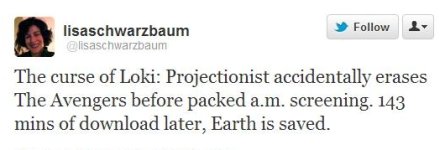
1335475808655.jpg
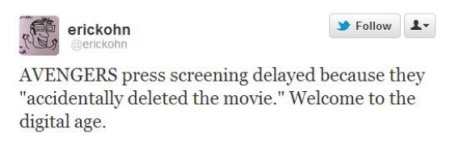
1335475808601.jpg
 
You are right about projectionists and theater staff. All of the 'old guard' projectionist's talent of keeping the inherent possible projection issues at the gates (no pun?) is no longer. I would say projectionists today are more frequently making errors from inexperience, making it a hard argument to make for film. Since I believe film is better than 2k when done properly; it is a frustrating when the people required to do it properly are not available. Shoots much of my argument in the foot. On the same token, as devil's advocate, do you think it might be unfair to use a decrepit old film print at a discount theater as your antidote for pro-digital? If we are to assume the digital projection has clean, well kept lenses, lamps and screens, can we not assume the film will too when comparing?

As mentioned in a previous post, they (the theater) will still manage to mess it up. haha Digital or film.
View attachment 60290
View attachment 60289

Well... not quite as bad as my experience as a youth in 25/50 cent movie houses... but at the moment, the digital experience of 'defective projection'... has been far less than with digital than film.

Putting aside the Wife's need for captioned, which now supplied with most digital 'standard projection'... for some strange reason not available for IMAX typically... and 3D as well... but anyway, when we talked to the 'projectionist' of late, there has been only one person to manage the projection system on duty for the theater... with automated systems even for film, it cut down on the needed staff. The reason why we have frequently spoken with the projectionist, or manager, is because the caption equipment was not working correctly, or the audio 'piped' in from IR or RF transmitters for her earphones was whacked...
 
Back
Top