Foxconn in talks with RED to produce affordable 8k cameras

joe1946

Veteran
Nikkei reports that Foxconn is in talks with RED to form a joint venture or partnership in order to produce affordable 8k cameras:

Major iPhone assembler Hon Hai Precision Industry, better known as Foxconn Technology Group, said on Sunday that it plans to team up with premium camera maker RED Digital Cinema to make professional-quality and affordable film cameras for the general public, while expanding into the manufacture of semiconductors for displays and cameras.

We will make cameras that will shoot professional-quality films in 8K resolution but at only a third of current prices and a third of current camera sizes," Foxconn Chairman Terry Gou told reporters in Taipei following the company's annual employee party before the Chinese New Year. 8K ultra-high definition resolution has become the benchmark standard for digital television and cinematography.
https://photorumors.com/2018/02/12/foxconn-in-talks-with-red-to-produce-affordable-8k-cameras/

Rumors are that Panasonic and Sony plan on 8K mirrorless cameras and 8K TVs by 2020.
 
Sounds good to me...but affordable for who?

I'm still paying off a camera that's named after a bird and sold in a phone/computer store.
 
At one point there is no point because traditional lenses have a limited resolution.

On the other hand the metalens is on the horizon:

light-focus-meta_1024.jpg


https://www.sciencealert.com/single-metalens-brings-all-rainbow-colours-into-single-point-focus
 
And the motto of the majority of camera shooters here "I would rather be limited by my own ability than by the camera".
 
And then there's the minority, like me, who say, "8K is stupid, pull your collective heads out people, talent hates 8K and it exists purely to sell you more gear that you don't need." If nobody cared about, wanted or bought 8K or whatever K will come out after it, manufacturers would actually be forced to truly innovate to get us to buy new gear.
 
Last edited:
I agree with that ^

I can see about 3k in optimal conditions (and that would be with a screen that I can't afford, 130" for my current living room). So, 4k is already giving me some nice reframing or oversampling options, I see absolutely no point on higher resolutions.

Then again, I said that about 4k a few years ago, then I learned to love these reframing options. So, who, knows...
 
I shoot 4K most of the time. What I'm looking for in a new camera is better dynamic range with good exposure latitude and greater bit depth. My new camera must have NDs and an easy workflow, be lightweight, small but with good ergonomics. It must have high frame rates, HDR and, ideally, a global shutter or at least no noticeable rolling shutter. It must have excellent auto focus, exposure tools and a variety of in and outs to easily connect sound and external monitoring. Good powering options are also on my list. I'm not looking for 8K...
 
And then there's the minority, like me, who say, "8K is stupid, pull your collective heads out people, talent hates 8K and it exists purely to sell you more gear that you don't need." If nobody cared about, wanted or bought 8K or whatever K will come out after it, manufacturers would actually be forced to truly innovate to get us to buy new gear.
Is there a reason I sometimes see video guys complain about too much resolution but I can't recall every hearing photographers complain about too much resolution? Maybe I just haven't been hanging around photographers enough.
 
Is there a reason I sometimes see video guys complain about too much resolution but I can't recall every hearing photographers complain about too much resolution? Maybe I just haven't been hanging around photographers enough.

I’ve got a stills campaign coming up next month that the Agency insists be shot on a 100 megapixels digital back. Will be shooting relatively simple portraits, & in my opinion that’s too much resolution for the subject matter. Even did a test shoot comparing Canon’s 50MP 5Ds vs the 100MP back, & found them both to have too much resolution.
 
Last edited:
If you shoot stills you can fix skin issues in post, and the results from that usually look better the more resolution you have to begin with. We have beauty filters for video too (I use MB Cosmo), but it's nowhere close to what my photog friends can do in photoshop.
 
Then again, I said that about 4k a few years ago, then I learned to love these reframing options. So, who, knows...

And that right there is why some people want this. There comes a point where you can skimp on the people operating the camera because you can then fix it in post.

The other good reason (maybe the only good reason) is that it would be useful in SFX work to have all those extra pixels.

But think of it this way... What if they can bring the price down to where regular mortals can own it, and then it has wonderful processing to give us a very good supersampled 4k output? Should be able to get a super clean 4k out of these cameras.
 
And then there's the minority, like me, who say, "8K is stupid, pull your collective heads out people, talent hates 8K and it exists purely to sell you more gear that you don't need." If nobody cared about, wanted or bought 8K or whatever K will come out after it, manufacturers would actually be forced to truly innovate to get us to buy new gear.

I don't know. This convinced me there might be something to it.
https://vimeo.com/248235757
 
https://www.43rumors.com/panasonic-confirms-its-goal-to-launch-a-gh-camera-with-8k-by-2020/

Sony plans to roll out 8K-compatible TVs in 2020. Though Panasonic did not give a specific date, the company will aim for a launch in time to capitalize on TV purchases made ahead of the 2020 Tokyo Olympics. Since the pair will be competing in the same market, they will work to differentiate their products.

The 8K content will not be available right away, meaning the market will need time to grow. As such, Panasonic and Sony concluded that solo development of 8K technology likely would be unprofitable. The two companies will work on 8K while continuing to focus on 4K TVs, which have been selling well.

Panasonic and Sony are expected to apply 8K technology to a variety of other devices as well, such as digital cameras. They and the rest of the Japanese alliance hope to seize the initiative on next-generation broadcasting technology with government support, bringing it to the world on Japan's terms.
https://asia.nikkei.com/Business/Companies/Lost-market-share-prompts-Sony-Panasonic-TV-tech-alliance
 
Is there a reason I sometimes see video guys complain about too much resolution but I can't recall every hearing photographers complain about too much resolution? Maybe I just haven't been hanging around photographers enough.

I'm also a stills photographer on occasion and I stopped caring about still camera resolution years ago because for 99% of applications, it doesn't matter. Most still images are viewed on the web and or 4" smartphone screens. It's generally agreed upon in the stills world that the resolution wars are over, other than for the select few professionals who shoot large image art installations, billboard images, etc. and use and care about or have clients who care about 100 MP digital backs, etc. OTOH, if you drive down Cahuenga Blvd. through Hollywood, there is a tall narrow building that has had those "Shot on an iPhone" images all over it, with the image hundreds of feet tall and it looks pretty good to me so I guess at some point, you have to question if really expensive backs with huge images are more for ad agency status symbolism or for the actual post editors who are asking for insane resolution.

Writing about technology and actually talking with and interviewing the engineers, marketing teams and product reps who create and market all of the stuff we drool over, I have found that higher resolution generally is a cheap, easy way to increase sales and perceived quality without innovating. Real innovation is expensive and time consuming, that's why few, if any of the top cameras on the market are actually "better" than their competition. Increasing resolution isn't expensive or time consuming generally (although to be fair, the new Arri LF actually took some imager innovation to keep the Arri signature look while not radically increasing physical size and weight). I can also say that I know from conversations with various people at the large companies and even some of the smaller ones, increased resolution is almost always a request from the marketing department, because numbers are impressive to most people who don't understand how image creation really works, it's rarely driven by designers and engineers. A camera like the Arri LF was obviously created specifically to satisfy Netflix and other OTT delivery specs, that's it.

If you get away from video spec nerds and speak with world class cinematographers (over the past few years, I've spent considerable hours on and off set discussing this stuff with people like Robert Elswit ASC, John Toll ASC, Roger Deakins CBE, ASC, BSC, CBO, Russell Carpenter ASC) few of them care about resolution, they mostly care about reliability, operational ease, quality of image, dynamic range and what the cameras DSP does for skin tones and accuracy. Most of them care far more about lenses and lighting than which flavor of the month resolution and camera model being used. Little of the stuff people obsess about on boards like this matters in the real world for most applications and audiences. That's why it bugs me that most camera companies posit that by upping resolution, they are innovating and why most camera nerds hop right on the bandwagon because they simply don't know any better. Greater resolution, if anything, makes images look worse in many ways, IMHO, it's like looking at a talent's face with a microscope, the amount of softening, diffusion and makeup needed to counter this effect, especially in MCUs and CUs, is counterproductive to me.
 
Last edited:
I think we'll see further development of very effective plug in packs that emulate diffusion, softening, haloing, etc. at increasingly low price points in the coming years.

The resolution wars are over for photographers because they have all they need - everyday web delivery photographers can aggressively reframe and recrop their images without quality loss due to the high resolution. With video, it's still much more a matter of getting it right from the start.

No doubt the big names don't care about resolution, they work with the best of the best and have framed it right their whole life. By the way, there is honor and art in that.

I think lower level productions - not just prosumers but midlevel TV shows, etc. - eat up the extra resolution. There is a ton more room for error and post adjustment, and softening afterwards.

VFX also eat it up - more precision, tracking points, color adjustments, etc.

In terms of 8K for web delivery if you are framing it right from the start... meh.

I do think things are going to see a lot of change in the next 20-30 years. Metalenses, multi lens arrays, focusing in post, crazy compelling autofocus, IBIS on large sensors, automatic electronic VND, 16k resolution, RAW onto tiny media, etc.

When all of that costs less than $10k the days of needing talent to capture good images will put a lot of us out of work as DPs. Not to go apocalyptic. Just saying. When you can screw up white balance, exposure, framing, and even focus on set... when you don't need to stabilize... when you can literally set everything to auto without compromise... and when you can outsource a ton of the post work of "fixing" it to China and India for cheap... the need for talented DPs and Camera Ops begins to disintegrate.

This video was super interesting:

I don't know. This convinced me there might be something to it.
https://vimeo.com/248235757

And speaks right into the first wave of that.

TL;DR -- If you don't really understand it, 8K is about higher resolution images. 8K if you do understand it is about fixing it in post.

My 2 cents ;)
 
BTW, I should mention that I have several little Foxconn book size computers running... as servers. They know how to make a decent product and make it cheap. Sure they aren't as nice and powerful as my SuperMicro servers, but they do the job I need of them and generally cost around $250 with ram and hard drive.
 
No doubt the big names don't care about resolution, they work with the best of the best and have framed it right their whole life. By the way, there is honor and art in that.

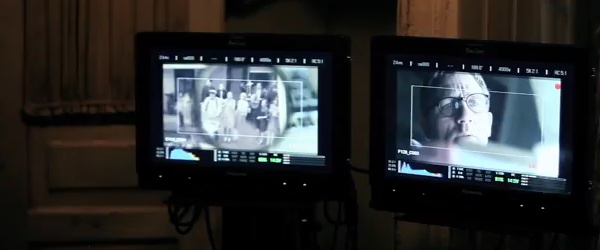
Everybody likes having options. It's very common to see monitors with a relatively big crop in BTS videos of big movies shot on RED. This is from THE GIRL WITH THE DRAGON TATTOO (I searched for it because I remembered this detail from the BTS stuff in the bluray).

The-Girl-With-The-Dragon-Tattoo-BTS.jpg


In Blade Runner 2049, when he finds the thing (sorry about the vague talk, I don't want to spoil it in case anybody has still not seen it, though by now it would just be your fault XD), the closeup of the thing is super soft, either they failed to focus correctly and did not reshoot, or, more probably, didn't like the closeup they shot and decided to pull one from a wide shot.
 
I'm also a stills photographer on occasion and I stopped caring about still camera resolution years ago because for 99% of applications, it doesn't matter. Most still images are viewed on the web and or 4" smartphone screens. It's generally agreed upon in the stills world that the resolution wars are over, other than for the select few professionals who shoot large image art installations, billboard images, etc.

For fine art prints more resolution is a plus, as long as it doesn't mean trading off on other more important characteristics like color rendition and dynamic range.

If you get away from video spec nerds and speak with world class cinematographers (over the past few years, I've spent considerable hours on and off set discussing this stuff with people like Robert Elswit ASC, John Toll ASC, Roger Deakins CBE, ASC, BSC, CBO, Russell Carpenter ASC) few of them care about resolution, they mostly care about reliability, operational ease, quality of image, dynamic range and what the cameras DSP does for skin tones and accuracy. Most of them care far more about lenses and lighting than which flavor of the month resolution and camera model being used.

Envying the company you've been keeping aside, that's because they care about the image quality and storytelling rather than about the specs of the cameras, since lenses, lighting, and where the camera is have a much bigger affect on the image than the specs of the camera.

Little of the stuff people obsess about on boards like this matters in the real world for most applications and audiences. That's why it bugs me that most camera companies posit that by upping resolution, they are innovating and why most camera nerds hop right on the bandwagon because they simply don't know any better.

It's a bigger number, so it's easy to market, kind of like clock speeds in processors used to be.

Greater resolution, if anything, makes images look worse in many ways, IMHO, it's like looking at a talent's face with a microscope, the amount of softening, diffusion and makeup needed to counter this effect, especially in MCUs and CUs, is counterproductive to me.

Yeah, I'm finding that for filmmaking, the benefit I'm getting from 8K is minimal, as I'd expected. It does look gorgeous in 2K or 4K, but it also makes for great printable stills with a relatively compact body, making it a great hybrid camera. :)

In Red's case though, the upside to 8K is that it comes with some very nice color because of other characteristics of the sensor and image processing.
 
Back
Top