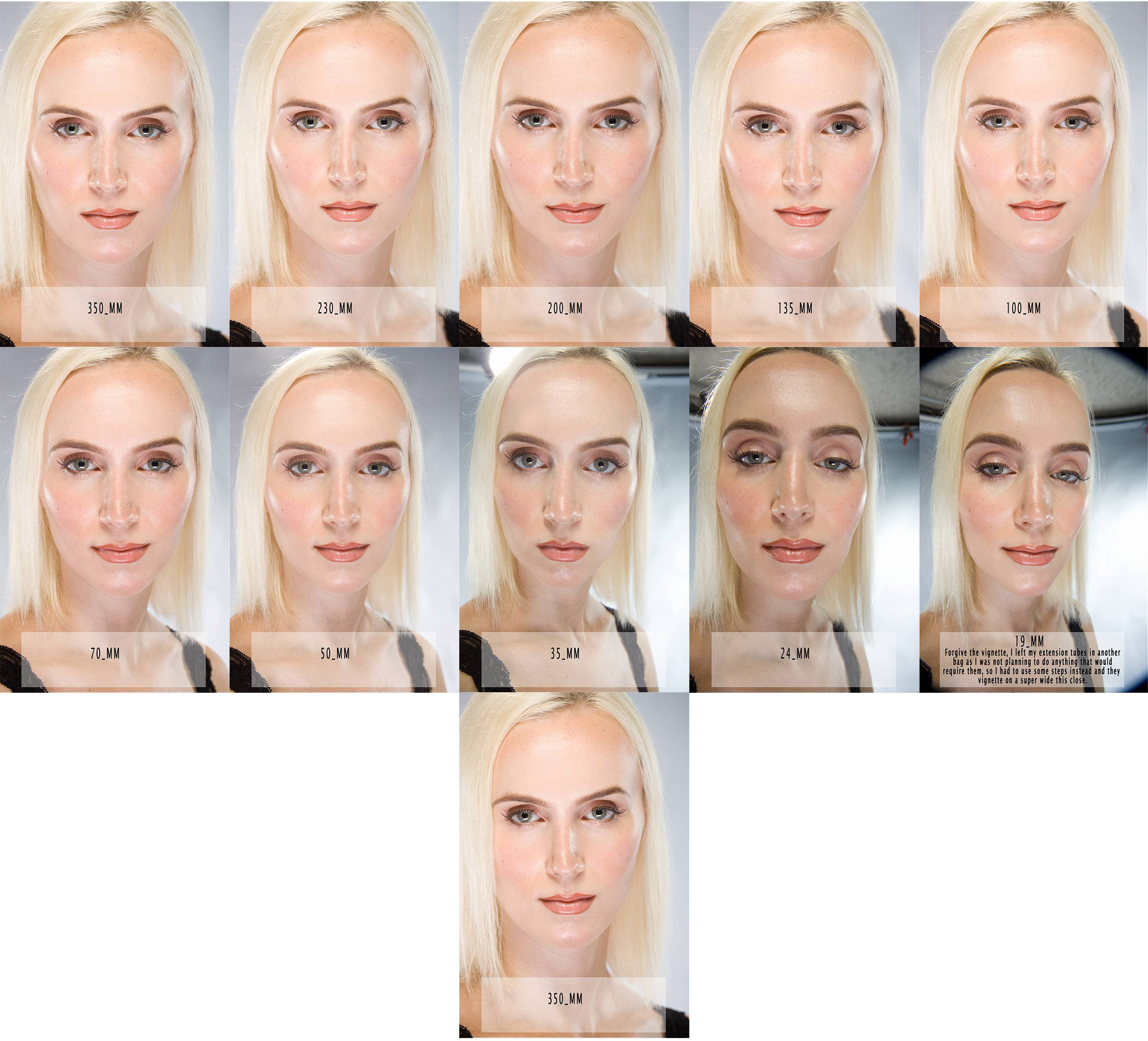
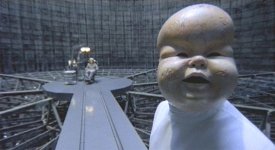
Filming Non-Wide Shots with Wide-Angle Lenses

ASchear

Well-known member
So I'm working on this project with a director that really insists on using wide angle lenses for nearly everything. For example, he wants to use a 28mm lens to shoot singles or over the shoulder stuff. Imagine two characters having a conversation standing right next to each other and in the shot-reverse shot coverage he's getting you can see their feet.

I'm not trying to encroach on this guy's creative control here, but I explained to him that I felt it's difficult for me to make a shot look good when I don't think the shot "looks" good overall. Inserts shot on a wide angle lens just seem amateur to me. I asked if there was any type of motivation for the shots to be in such wide angle - to make the characters seem further apart, to make it seem like the audience is a fly on the wall watching, etc. He told me there was no reason, he just thinks the shots look good like that. If there was some type of underlying motivation for using the lens, I would have a much easier time. But from the shot lists he's giving me, he's more or less doing standard coverage for these scenes, but with a wide angle lens for some reason. (Which confuses me so much, especially because he went ahead and had a 50mm f/1.2, 85mm f/1.8, and 70-200mm f/2.8 rented for the film in addition to his 24-105mm 5D kit lens. I was really excited when he went and got these for me.)

I think I'd have a much easier time swallowing all this if I were getting paid to do this project, but I'm a student and it's a student production that I volunteered to try because one of my friends is the producer, so it's no pay. They're a week out from production, so I don't necessarily want to just bail on them, especially because they want to use my house as one of their locations.

So I want to try and make the best of it although it seems to go against everything I've learned about making your low budget student film look nice, and my personal opinion that it's going to look absolutely horrible. Has anyone worked in a situation like this before? Are there any tricks to making these shots look half decent enough to throw on my reel?
 
My advice? If you're doing it as a favor, just do the favor. Shoot the shots he wants. You've explained why you don't think it will look good and offered your suggestion. Now let him make his movie.
It's a lesson we all have to learn one time or another-- there are many creative elements in movie making, and sometimes you just have to roll with it.

I concur! Shoot it as he likes since it's his film. His underlying motivation is: He likes the look. WHo knows you may learn something and you may even like it. Of course we all know the weird larger noses and ears you're going to get trying to shoot intimate scenes wide AND close, but roll with it.
 
Have you shot any tests yet, or are you going straight to production? If you have the time, do shoot some tests for the scenes, to get the style set, but also how you want to do it. After all, a picture says more than a thousand words. But yeah, if that is the way he wants to do it, do it. If you feel unhappy with the results, you can always take your name off the picture or use a pseudonym in the worst case scenario.
 
I feel like part of the problem is that you should get out of the mindset that you're there to make the shots "look good" and you're not there to get shots that will fit nicely into your reel. Just remember you're there to tell the story using purely the visuals, which can even mean shooting on VHS tape or 8mm film if it suits the story. Just because something is technically good doesn't make it right for the film.

If you really need to see how to use wide angle lenses effectively, watch Delicatessen, watch Amelie, watch micmacs....Jean Pierre Jeunet not only uses nothing but wide angle lenses, but he makes some of the most impressive, amazing, and well thought out compositions in all of his films. A lot of times those wide lenses are just used to create a new world in his films that's unlike anything you see anywhere else.

What I would do if I were you is just look at the story and figure out what lenses you would want to use and why. Try to forget about preconceived notions about the "right" lenses to use and think about whats right for the film. When you figure out what you think would be best, tell the director that and why you want to do what you want to do. If after that he still doesn't understand what you want to do, either jump ship or grin and bare it.

One last thing I heard from an ASC DP that has stuck with me ever since, "There are no rules, only tools".
 
Wow, that is a pretty unique situation. I have been shooting for a VERY long time, and I have never had a director dictate a focal length to me, and I have worked with some very inexperienced directors. Now, when I shoot a fictional narrative, I make sure that I have a copy of the script, and I spend a tremendous amount of time doing a cinematography break down and a suggested shot list. I also put together a visual design concept, which is an essay of a page or two, explaining the visual approach that I would suggest that the film take, and why. Now, the films I have DPed (Very low budget films, so far) most of my design concepts has dealt with lighting, framing and camera movement issues. Focal length choices have not been an issue for me, and the folks I have worked with, yet. I would suggest that you go through the script, do a cinematography break down and put together a visual design concept that you think would best serve the story. When you have that, printed out, have a meeting with the director, explain your point of view, and ideas for the look of the film (And that you thought that your involvement with the project was contingent upon your being responsible for visual choices made) and share your concerns about his noted choices of focal length. From this, you guys should be able to work out a visual design based on a mutual consensus. If he is not open to this, well... since you made a commitment, I would bite my lip and shoot the the thing his way. Do the best you can to make the thing look good within the parameters you are given, and go on to the next project. If you do have to go ahead and shoot shots that you think are not appropriate, but that the director wants, DO NOT ***** ON SET, OR TO ANYONE INVOLVED WITH THE PROJECT. If you want to do this sh*t for a living, show up on time, with a positive attitude, work hard and do your best to be someone that everyone likes to be around on set. If you can develop that rep, your reel is secondary. I will reiterate this, If you get into a project that you have problems with, NEVER ***** ON SET!!
 
That bastard stole my next for-fun project idea... an exclusively wide-angle narrative.

Just watch a whole lot of Terry Gilliam's films for inspiration.
 
Thanks for the advice all, I will watch whatever I can this week and before our next shooting weekend on the 19th. My main issue is that, when he wants to shoot mediums or close ups, he simply tells me he'd rather just move the camera closer than change lenses. I'm going to try and explain to him is that I don't mind his framing of the subject, but in order for me to do my job I need to have a little more control over what focal length lenses I use because I'm the person with more expertise and I'm the person shooting the film.

I won't ***** on set! Never. Worst that will happen is I'll just go into "okay, where do you want the camera for this shot and with what lens" mode if I can't make frames that please him and me. Hopefully it won't come to that, but it has before for me when I've had directors that just can't communicate effectively what they want to me.

Also, just to note - when I say that a shot just doesn't "look" good, I mean that the frame is uninteresting. Again, if he gave me more of a reason that he wants to shoot wide angle, another example being that he wants to do something with the background or set for story purpose, I'm all with that. But please understand that if I can't have virtually any control over what we see in the frame by changing our field of view, it becomes increasingly difficult for me to frame interesting shots. Amelie had beautiful and interesting locations, especially that cafe which we all loved. I have a tiny kitchen in a college student's house with off-white walls for one of my scenes.
 
Last edited:
I have a tiny kitchen in a college student's house with off-white walls for one of my scenes.

And this isn't the exact place a 'wide angle lens, close up' would work 'correctly'?

Back in the wedding shooting days, I's back my self up in a corner, on a stepladder, and wish I had a 12mm vs my 16mm lens for 35mm still film (1:1.5 aspect ratio...).
 
Show the director this:

stepheneastwood-tile1.jpg
 
DO NOT ***** ON SET, OR TO ANYONE INVOLVED WITH THE PROJECT. If you want to do this sh*t for a living, show up on time, with a positive attitude, work hard and do your best to be someone that everyone likes to be around on set. If you can develop that rep, your reel is secondary. I will reiterate this, If you get into a project that you have problems with, NEVER ***** ON SET!!

Just letting you know, this might be the best thing ever.
 
That chart is a little missleading, considering I guess the movie will be shot in a landscape format, making the distrotion more similar to a 50

I have one lens I keep with my 5d - having moved most others to my Fs100 bag .. its a 28mm - If I had to live with one lens it would be that one

But to me the most important choices as DOP is position of the camera relative to the subject, and how much of the subject to show

The distance of the camera to the subject is much underated

I am used to looking at the Pope from a long way away, and soccer players too.. they tend to look 'right' shot with a tele

I am used to looking at my girlfriend up really close, romance scenes often feel intimate with the camera close in

A vouyer/spy often call for a long lens - like the one they could be using etc etc

Now a typical scene I would choose to observe it from a distance shoot the CU and Master from the same distance with different lenses, rather and shooting a CU with the same lens and moving the camera

I think your director is probably horribly misguided.. or he is on to a very specific look.. which could be great

It could also be a great excercise for you , for example when you want to stay back (to avoid distortion) but draw attention to a subject you can use elements of the set or actors close to the camera to keep the frame clean

Or you can keep a specific framing which will probably make the viewer feel a little cold about the subject etc etc

Hey and you dont have to cart a bag of glass around or keep fiddling with the camera to swap lenses

Id go for a positive approach to this challenge

S
 
Interesting dilemma. I just wrapped shooting a short that was a cross between a western and a fairy tale. I decided to shoot with the GH2 and mainly a Nikon 18mm, with a few super wide shots using the Olympus 9-18m. The only time we went for a more classical look in closeups (usually with the Helios 50mm with the swirly bokeh) was when shooting CUs of the female lead - she was the 'fairytale' part of the story.

It can be done (see Touch of Evil, the majority of which was shot on an 18mm lens); but I find it works best when you're allowed to emphasize the unique qualities of wide lenses.
 
On 'Minority Report' they never went tighter than 27mm:

Kamiński said that he never used a lens longer than 27mm, and alternated between 17, 21, and 27mm lenses, as Spielberg liked to "keep the actors as close to the camera as possible."

Which is fine for a 2.35 movie where you can tend to frame a little more open because of the ratio. The thing is, if it's a 16:9 project you can end up limiting yourself regarding extreme close-ups.

And Kamisnki may have said that, but I still have my doubts when I see framings like this:

vlcsnap-2011-09-06-11h06m09s81.png


This doesn't look like a CU from a WA. To me it looks tighter than 27mm.
 
Last edited:
That's really interesting. And for something like that, I'd be completely fine because it's for a reason other than "because he liked the way it looks."

Just wrapped a 12 hour day of shooting...it was our second day. The first day, yesterday, was short and I was able to get some shots that I was happy with, besides 2 that he insisted we use because (I think) he just didn't try to design interesting shots for certain spots.

Today was a disaster and I need some advice on what I should do. I show up at set at 7 AM, the call time. I get a call from a friend of mine that volunteered his time to be my AC at 7:10 AM that he's at yesterday's location (he has no car and skateboarded there) asking me where I am. No one ever got a call sheet, and I figured the producers would be letting everyone know individually, we have no AD). I go pick this guy up and drive back to the location. First sign of the director and producer...7:30. The director sets up the camera (it's his and I feel he's a little to protective over his little 5D) and then calls me over to talk to him; "We might have some rain tomorrow so we're trying to squeeze a lot in today...I don't want to use any lights or any lenses longer than 50mm." Okay, I'll try my best to work under these circumstances.

We get to shooting, and as the day rolls on, I become relegated to mostly AC work; if you can call it that. I pretty much "checked" focus and exposure and set up the tripod after the director chose out the frame that he wanted and what lens he wanted to shoot on, where the dolly would be going, etc...I honestly felt that I wasn't needed there. I couldn't stop the thought from entering my mind "if he just wanted this, why wouldn't he have gotten some freshman who was interested in camera rather than a senior with 4 years of experience and a whole lot of expertise behind the camera?" The question still lingers.

I did my best to keep a positive attitude all day, albeit the difficult circumstance that I was working on this film instead of going to my senior homecoming football game (we won, 49-14 over a conference opponent). It was physically and emotionally draining for this reason, and I just couldn't wipe a depressed look from my face toward the late afternoon. I didn't ***** at anyone, because I know that never gets anybody anywhere.

This is the first time I've been working on a film that I no longer want to be a part of. I don't want my name in the credits because the cinematography simply is not mine. To be honest, I wanted to quit today but I stuck it out because I know I'm part of a small crew, and one of the producers is a really great friend of mine (who convinced me to throw my reel in the hat for DP). There's another 12 hour day scheduled for tomorrow, and a pair of 6-8 hour days 2 weeks from now on the weekend. I really don't know what I should do. I do NOT want to wake up again at 6 in the morning tomorrow to go to a set that I'll hate being at. But I understand my commitment to the project. I just don't feel my necessity. If not before, I absolutely want to quit after tomorrow.

Advice please?
 
Last edited:
Plus keep in mind that was a Super 35 film! So firstly, a 27 in 16:9 in Super 35 is roughly a 40mm on the 5D. After that the top and bottom was cropped too. With that in count, a 27 lens would give the vertical field of view of a 54mm lens on a 5D. That's exactly twice the focal length we started with. Always keep that in mind when comparing lenses, is the field of view. If a director goes: But Welles used an 18mm all the while on Touch of Evil, remember that as it was shot on Academy Ratio, which is about a 1.8 crop (close to a GH2) where an 18mm corresponds to a 32mm on a 5D.
 
I thought the DP's job was to capture the Director's vision. If the Director thinks that it looks good shooting everything with a 24mm and it gives him/her the look he wants, then it's your job to make it the best you can within those constraints. I've only done small ultra low budget independent projects but I've done enough to have to work with all types of directors. Some know exactly what they want but don't know the technical side to get it. Some have been DP's before and dictate a lot of the specifics details of how to capture it. It's all part of the show. In the end it's your job to take what's given to you and add that little bit of extra punch to make it that much better.

Another thing is it sounds like you and the Director didn't communicate much prior to the shoot. That's just asking for disaster. Why didn't you have the scenes all blocked out, lighting schemes, color pallets, etc. all worked out ahead of time. Did you scout the location prior to the shoot? If not, how did you know you were going to have the right equipment? Did you do any test shot to discuss the look with the director? That could have helped a lot in you're understanding of what he was after and if it didn't turn out to be what he wanted then you two could have talked about how to get what he wanted.

As far as the long and sometimes frustrating days on set, that is something you'll have to get used to. You should have been able to anticipate that the shoot would not be very well organized. If you don't see a call sheet coming your way, you don't see a shot list ahead of time, and you don't get a script breakdown you know to anticipate that the set will be somewhat disorganized. Then, it's up to you to decide if you want to stick with the project or not. My personal philosophy is to make the best of it. Stick it out and show that you are willing to do whatever it takes to complete the project. That will go a lot further to getting you future jobs than a beautiful reel. Remember, for every negative comment someone hears about your ability to work with others takes at least ten other stellar references to cancel that out. And even then, some producers won't work with you.

Remember too that you as the person behind the camera, are often the only crew member within the eye line of the actors (other than the other actors in the scene). That means that you're mood, emotion and attitude has a very large effect on their performance. If you want the shoot to move faster make sure the actors never pick up on any negative vibes you may be giving off. They look great on every take and gave an Oscar winning performance as far as you're concerned. Nothing kills a set like talent that feels like they aren't looking good on camera, and as the DP they often will trust you for that even more than the director.
 
Back
Top