
Anyone know about DMX cables? (The 5pin XLR cables used for controlling lights.)
I use a Datavideo switcher (HS-2000) that uses those cables for the headsets / tally.
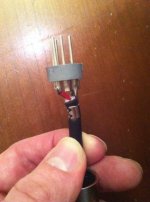
We ordered a few Hosa 5 pin XLR cables from B&H, but they only have 3 wires in them. (See attached photo.)
Obviously they don't work with the switcher as the switcher needs 5 wires for the headsets / tally. At a shoot with long cable runs I borrowed a DMX cable on a multi cam shoot from an AV / lighting tech & everything worked perfectly.
This seems like they're bad cables. Unless, does DMX use a 5 pin connector, but only 3 wires? It doesn't seem to make sense that you'd have empty pins with no wires connected to them.
I use a Datavideo switcher (HS-2000) that uses those cables for the headsets / tally.
We ordered a few Hosa 5 pin XLR cables from B&H, but they only have 3 wires in them. (See attached photo.)
Obviously they don't work with the switcher as the switcher needs 5 wires for the headsets / tally. At a shoot with long cable runs I borrowed a DMX cable on a multi cam shoot from an AV / lighting tech & everything worked perfectly.
This seems like they're bad cables. Unless, does DMX use a 5 pin connector, but only 3 wires? It doesn't seem to make sense that you'd have empty pins with no wires connected to them.
 Well that is a long story but the short of it is that when DMX was coming into being they picked 5 pin to keep it separated from mic cables. Over the years there have been attempts to use the second pair for talkback data. Most of that has gone by the wayside now. Even though the second pair is not used I always build my DMX cables with all 5 pins connected. I use true RS485 2 pair data cable. My opinion is that is the right way to do it and 3 pin XLRs are only for the noise boys.