Digital Bolex featured on Fox series "GLEE" tonight.

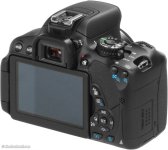
Is the show was at all realistic, the film student would be using his Rebel T5i with the kit lens, or his iPhone : P
 
Is the show was at all realistic, the film student would be using his Rebel T5i with the kit lens, or his iPhone : P

The producer called Digital Bolex to request the camera for this episode. But there is nothing realistic about GLEE. After seeing this episode, my first, I would call it a Bollywood style song and dance musical drama series.
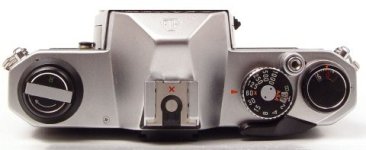
There are any number of schools buying the D16 as a replacement for Bolex film camera inventories. It can use all of the same lenses and accessories. Being a fully manual no automatic anything camera like its namesake, it is a great teaching tool for developing fundamental skills.
 
Being a fully manual no automatic anything camera like its namesake, it is a great teaching tool for developing fundamental skills.


This is the first time I've seen something that really makes me think the D16 is good for something.

I learned so much in my B&W 101 Photography class that I think it should be mandatory for anyone going into stills or video. And you should be required to use a camera that is fully manual.

Being forced to go slow. Being forced to do everything myself. Being forced to think w/o color. Being forced to think in reverse (bright is dark, dark is bright) while in the dark room. Being forced to... ... ...

I really attribute a lot of my understanding of shutter, iris & focus to the B&W Photography class I took in college. I have been shocked of how many times I've been next to camera people who are trying to make a living in this profession & they know less about XYZ than I did when I was 20 years old in college.
 
wait Razz16, Are you saying, that with all the help and effort you put into this camera Philip Bloom got one before you? WOW
 
There are any number of schools buying the D16 as a replacement for Bolex film camera inventories. It can use all of the same lenses and accessories.

Yeah... not sure outside of possibly NYU or USC any film schools use film at all. It was hard to find a school still using film went I went to film school - and that was more than 20 years ago.

So while I can see film schools buying the D16, it's not to replace 16mm film cameras - that happened a long time ago.

And I doubt students would much want to use lens or accessories from 30 years ago.

Why not? Many cinematographers still do. Premium 16mm cine lenses were and are top notch quality expensive glass if properly maintained. A good lens is a good lens. Given the popularity of using vintage C-mount lenses on m4/3 cameras that has driven prices to record highs I would say this is simply not true. Schools are adding raw digital cinema cameras to their curriculum since that is a significant new medium. Whether being used much or not, many still have 16mm film equipment inventories in the closet.

http://kurtlancaster.com/11/03/2014...ith-the-digital-bolex-in-pedras-mesa-roundup/
 
Why not? Many cinematographers still do. Premium 16mm cine lenses were and are top notch quality expensive glass if properly maintained. /[/url]

Yeah... about that. You ever see school lenses? Usually treated by students about as well as their dorm rooms. The vast majority - if they even exist - will be dirty, scratched, moldy, no lens caps, yada. So while if you buy a lens from a pro shooter you'd expect that lens to be in good shape, a schools lens, not so much. The chances of finding a lens in good shape at the bottom of a dusty closet will be quite slim...

Ditto that for the film gear. One of the coolest things the DSLR revolution brought was a plethora of new, small & light, equipment - sliders, small carbon tripods, video monitors - none of which you'll find in the left over film junk. You might find a giant blimp someone didn't what to do with or a gnarly tripod, but any viable support equipment worth using will have been bought for their video cameras - not for their Bolex's.

So while some schools might still have some film gear left, it certainly seems like a stretch to think that would be a reason to buy the D16. In any event, there's dozens of cheap, very good lenses for Canon & Nikon S35 cameras, and via a $10 adapter, the same is true for Sony NEX cams. And - because all those schools long ago switched over to video - there's a far better chance they already own some of them anyway.

All of the lightweight modern gear that works with DLSR's will work with the Bolex too. Plus you get the advantages of raw image quality and an organic artifact free film like image that no compressed video DSLR can approach. Schools are buying D16's. Kurt Lancaster's program has bought six of them and taken delivery on two already. If you want to learn or teach professional raw digital cinema practices as used for ARRI and RED work flows in the industry, the D16 is the best option out there. It is also the best option for teaching fundamental photographic/cinematography skills without the manufacturer imposed limitations of predetermined video options. Raw cinematography is the future of the entertainment film industry, not compressed video.
 
Learning cinematography and photographic skills has less to do with the recording format being used and more to do with lenses/lighting/composition/aperture/shutter speed/movement.
 
All of the lightweight modern gear that works with DLSR's will work with the Bolex too. Plus you get the advantages of raw image quality and an organic artifact free film like image that no compressed video DSLR can approach. Schools are buying D16's. Kurt Lancaster's program has bought six of them and taken delivery on two already. If you want to learn or teach professional raw digital cinema practices as used for ARRI and RED work flows in the industry, the D16 is the best option out there. It is also the best option for teaching fundamental photographic/cinematography skills without the manufacturer imposed limitations of predetermined video options. Raw cinematography is the future of the entertainment film industry, not compressed video.

Again - never said that the D16 wouldn't be appropriate for film school, rather that their decades past use of similarly named camera would have little to no impact on such a decision. And of course the newer support equipment will work for the D16 - it's a new light weight camera. However that equipment is new because those "film" programs long ago ditched film for similarly sized video cameras.

If you want to teach ARRI or RED workflows, buy those cameras. The idea that using a D16 will get you a gig using an Alexa is silly.

RAW the future? Perhaps - but certainly not on a number of TV shows, docs, web based series, or a plethora of other projects that need a quick turn around time or get their look in-camera. Heavy grading certainly has a number of users (and uses), but certainly not for all productions. RAW, like everything else involving a video camera, is a means to an end that has its pros and cons.

What is a guaranteed future for professional shoots is S35 sized sensors or larger. If you want to teach your students what pro DPs actually have to do with regards to a modern film shoot - dealing with/using follow focus to get sharp focus being a huge issue even ignoring all others - then the D16 is poor choice.

While the D16 will teach students about composition, lighting and the like, so would virtually any other modern camera - including ones that cost much less than the D16. Just as there is no perfect camera, there is no perfect teaching camera. There's a lot to recommend the D16 to students, but there's plenty of other choices that make equal or better sense.
 
Back
Top