Light emitting Plasma, or LEP, is getting a lot of press lately. However, you have to be wary of all the claims made by head manufacturers. Whenever a new lighting technology comes on the market, the manufacturers put a little spin on the scientific data (LED manufacturers do this still), which has a tendency to cloud issues. For this reason, to pick the right LEP luminary for a particular job it helps to have a little knowledge of the technology. For our company newsletter I have put together an overview of the technology and what products are available for motion picture lighting (available at http://www.screenlightandgrip.com/html/emailnewsletter_generators.html#anchorHigh%20Output%20LEPs.) In this newsletter article I have tried to cut through some of the hype. Here is a quick summary of a few of the issues.
Yes, LEP bulbs are capable of intense light output. One manufacturer, Luxim, claims their technology can produce 144 lumens per watt. In contrast, Tungsten Halogen bulbs produce 15 lumens per watt, LED emitters produce between 65 to 85 lumens per watt (in practical applications), and HMI bulbs produce 90 Lumens per watt. While there is truth in this claim as it pertains to an LEP bulb in isolation, as with LEDs, manufacturers have not realized anything close to that kind of lumen efficiency within the framework of a practical light that will burn in all lamp orientations.

The Helio 270 LEP
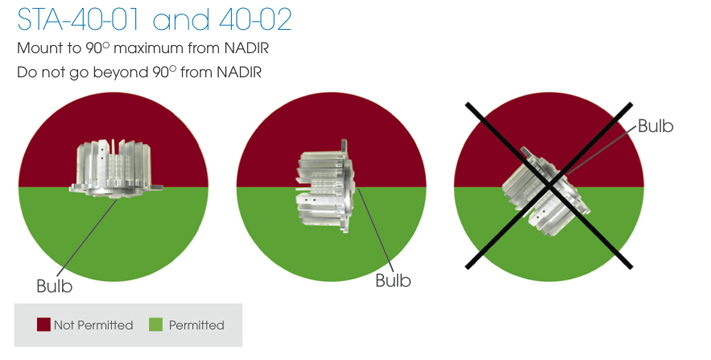
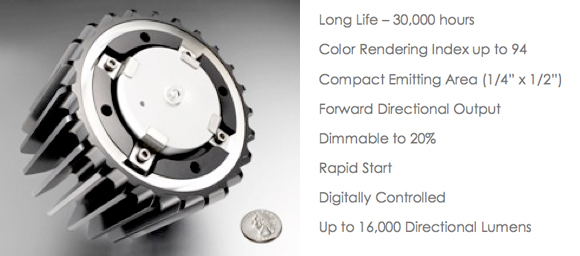
When the pill sized LEP bulb in mounted in the “puck” so that it will burn in all head orientations, the emitting area is no more than 1/4" x ¼." In this configuration, the 273W LEP bulb will deliver 16000 lumens or 57 lumens per watt. While much less than the 37’000 lumens the bulb will generate fully exposed in a horizontal position, it cannot be tilted up in that orientation. On the plus side, mounted so that it will burn in all orientations, all of its’ output is forward directed within a 60 degree angle so it doesn’t require a reflector. Such a highly localized forward directed light is ideal for Fresnel type instruments. As close an approximation to the ideal point source that exists today, its light output favors the central portion of the Fresnel lens. Since, this part of the lens has greater transmittance, LEPs are a more efficient source for Fresnel type heads than tungsten filaments, LED arrays, and even HMI arcs. For this reason you get more of those lumens transmitted through the lens in a highly collimated light that is very clean and crisp making it great for cutting shadows or gobo effects. The 273W LEP bulb in a Fresnel type instrument has an output comparable to a 575W HMI Fresnel.

Forward directed output of Helios 270 LEP
LEP head manufacturers also claim that LEP lamps provide a CRI of 94+. While impressive, CRI ratings published by manufacturers can be misleading. Where the CRI index indicates the ability of a light source to reproduce to the eye only 8 colors faithfully (a different 8 colors are used in Europe) they should be taken with a certain amount of skeptism. In the case of LED luminary manufacturers, for instance, it is possible to tune their output to the limited color range of the CRI color scale and deliver good color rendering to the eye while delivering generally poor color reproduction on the screen.

More important than their high CRI ratings, is the fact that LEP lamps generate light with a continuous color spectrum. If you compare the spectral power distribution graphs (above) of natural daylight and LEP lamps (available at http://www.screenlightandgrip.com/html/emailnewsletter_generators.html#anchorHigh%20Output%20LEPs) you see that, except for very brief drop outs at approximately 425 nm and again at 475 nm, the light output of LEP lamps is almost identical to natural daylight.
And, as also can be seen in their spectral distribution graphs above, Plasma lamps have a much more continuous color spectrum than even the best LED luminaries on the market today. For instance, LEP lamps, unlike LED lamps, generate light at wavelengths shorter than 425nm - which means that violet colors will render better. And, unlike LED lamps, LEP lamps also output in the medium blue-cyan-turquoise range from about 465-510nm so aqua-type colors render well by comparison. Skin tones and warm, amber-yellow colors stand out better under LEP lamps because of the strong presence of their complementary colors. And, since the output of LEP lamps extend all the way out on the long-wavelength end (well beyond the 600 nm cutoff of LEDs), pinks, reds, oranges, and other long wave-length colors look vibrant under LEP light where they tend to look a little dull under LEDs. As a continuous spectrum source, colors not only appear more natural and vibrant under LEP lamps than under LED lamps, they also reproduce more accurately on the screen since, as is also evident by their spectral distribution graph, the output of LEP lamps is almost an exact match to the spectral sensitivity of daylight film emulsions and digital sensors. Plasma lights will deliver the same true-to-life color rendition previously achievable only with full-spectrum Daylight or HMI sources. As an added bonus, color meters, like the Minolta III F, that make their calculations of the Color Temperature (CT) based on a light sources continuous spectrum, are able to generate accurate reading of the CT and Green/Magenta of LEP lamps where they are almost completely useless with LEDs.
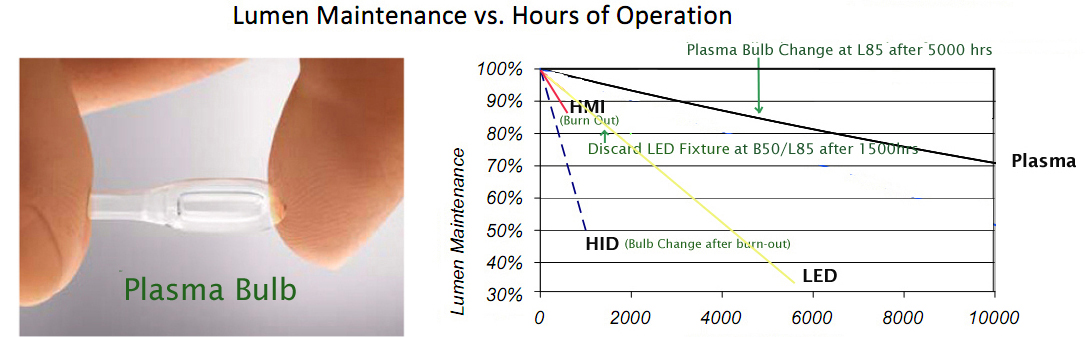
Another feature of LEPs that has been overblown is their purported 20-30’000 hr lamp life. But, where I am out of space here, I will pick up with that issue in my next post.
Guy Holt, Gaffer, ScreenLight & Grip, Lighting Rental & Sales in Boston
Yes, LEP bulbs are capable of intense light output. One manufacturer, Luxim, claims their technology can produce 144 lumens per watt. In contrast, Tungsten Halogen bulbs produce 15 lumens per watt, LED emitters produce between 65 to 85 lumens per watt (in practical applications), and HMI bulbs produce 90 Lumens per watt. While there is truth in this claim as it pertains to an LEP bulb in isolation, as with LEDs, manufacturers have not realized anything close to that kind of lumen efficiency within the framework of a practical light that will burn in all lamp orientations.
The Helio 270 LEP
When the pill sized LEP bulb in mounted in the “puck” so that it will burn in all head orientations, the emitting area is no more than 1/4" x ¼." In this configuration, the 273W LEP bulb will deliver 16000 lumens or 57 lumens per watt. While much less than the 37’000 lumens the bulb will generate fully exposed in a horizontal position, it cannot be tilted up in that orientation. On the plus side, mounted so that it will burn in all orientations, all of its’ output is forward directed within a 60 degree angle so it doesn’t require a reflector. Such a highly localized forward directed light is ideal for Fresnel type instruments. As close an approximation to the ideal point source that exists today, its light output favors the central portion of the Fresnel lens. Since, this part of the lens has greater transmittance, LEPs are a more efficient source for Fresnel type heads than tungsten filaments, LED arrays, and even HMI arcs. For this reason you get more of those lumens transmitted through the lens in a highly collimated light that is very clean and crisp making it great for cutting shadows or gobo effects. The 273W LEP bulb in a Fresnel type instrument has an output comparable to a 575W HMI Fresnel.
Forward directed output of Helios 270 LEP
LEP head manufacturers also claim that LEP lamps provide a CRI of 94+. While impressive, CRI ratings published by manufacturers can be misleading. Where the CRI index indicates the ability of a light source to reproduce to the eye only 8 colors faithfully (a different 8 colors are used in Europe) they should be taken with a certain amount of skeptism. In the case of LED luminary manufacturers, for instance, it is possible to tune their output to the limited color range of the CRI color scale and deliver good color rendering to the eye while delivering generally poor color reproduction on the screen.
More important than their high CRI ratings, is the fact that LEP lamps generate light with a continuous color spectrum. If you compare the spectral power distribution graphs (above) of natural daylight and LEP lamps (available at http://www.screenlightandgrip.com/html/emailnewsletter_generators.html#anchorHigh%20Output%20LEPs) you see that, except for very brief drop outs at approximately 425 nm and again at 475 nm, the light output of LEP lamps is almost identical to natural daylight.
And, as also can be seen in their spectral distribution graphs above, Plasma lamps have a much more continuous color spectrum than even the best LED luminaries on the market today. For instance, LEP lamps, unlike LED lamps, generate light at wavelengths shorter than 425nm - which means that violet colors will render better. And, unlike LED lamps, LEP lamps also output in the medium blue-cyan-turquoise range from about 465-510nm so aqua-type colors render well by comparison. Skin tones and warm, amber-yellow colors stand out better under LEP lamps because of the strong presence of their complementary colors. And, since the output of LEP lamps extend all the way out on the long-wavelength end (well beyond the 600 nm cutoff of LEDs), pinks, reds, oranges, and other long wave-length colors look vibrant under LEP light where they tend to look a little dull under LEDs. As a continuous spectrum source, colors not only appear more natural and vibrant under LEP lamps than under LED lamps, they also reproduce more accurately on the screen since, as is also evident by their spectral distribution graph, the output of LEP lamps is almost an exact match to the spectral sensitivity of daylight film emulsions and digital sensors. Plasma lights will deliver the same true-to-life color rendition previously achievable only with full-spectrum Daylight or HMI sources. As an added bonus, color meters, like the Minolta III F, that make their calculations of the Color Temperature (CT) based on a light sources continuous spectrum, are able to generate accurate reading of the CT and Green/Magenta of LEP lamps where they are almost completely useless with LEDs.
Another feature of LEPs that has been overblown is their purported 20-30’000 hr lamp life. But, where I am out of space here, I will pick up with that issue in my next post.
Guy Holt, Gaffer, ScreenLight & Grip, Lighting Rental & Sales in Boston