Coollights LED

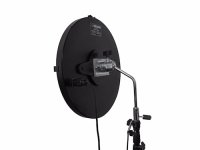
An LED stop sign? A vertical metal detector? A manhole cover hanger? A train track switcher? An eye patch installer for giants?
 
Last edited:
You'll be able to use that model in many different configurations when all the accessories are ready.

EpicR1024RtProfileCmm.jpg
 
I get it now. It's a shield to block the things that pissed off people who are being interviewed throw at the camera operator!

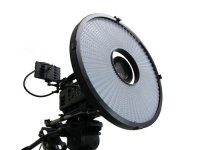
That, or a ring light.
 
You may be on to something with the shield, hadn't thought of that one, LOL.

R1024Front2WhiteCmm.jpg

Really like the quality of light we're getting now out of the new LEDs. I took one of the new models with me to the USA in September to a well known institution in Hollywood. We tested it there, this stands up among the best of LED models available today in color rendering. Nor is there any appreciable green spike at all. Key parts of these LEDs do not come from China or even Asia, so that already sets our new models apart. Wished I could have taken pictures and video of the occasion but they can't let themselves be used in marketing so we respected that. We have test equipment and access to other test equipment, but I was mainly interested in seeing how we stack up anyway from an industry point of view.

There are 4 models in the series altogether. This probably being the first one to come out.
 
How does your new technology compare to using LEDs to activate a phosphor plate? With respect to hardness of image, throw and quality of light?
 
You're asking me to contrast what we are doing on these models to remote phosphor technology basically. Remote phosphor will be more akin to fluorescent or diffused tungsten in terms of throw and softness of light because you basically have a large panel surface emanating light. Not much different than a softbox or tungsten softlight fixture. Shadows will be undefined at the least or even practically non existent. These 4 new models we're making are using 5mm LEDs so the throw and type of light is more like any other array of 5mm LEDs. That is a cross between soft and hard light with more throw than soft light but not quite as much as a hard single and powerful spotlight using a single point source and a good lens and mirror setup. The definition of shadows from a multi-array panel is more akin to fluorescent with things close being somewhat pixelated, midway off being undefined and farther away being completely normal single shadows.

In my blog article of 2009 about LEDs and CRI, I said we had been actively looking for a high CRI daylight LED but they just didn't exist as a stock item you can find on the shelf somewhere. It wasn't long after that I realized that if we want that, we just have to make it ourselves and can't wait for the lighting market as they don't care about CRI in general. We have spent the time to make something that holds up very well.

As far as CRI goes, there isn't anything inherent in remote phosphor technologies that makes them superior. We have a remote phosphor sample panel and we have compared it to the new LEDs we are using and I see practically no difference in terms of CRI. We can do 92 CRI in daylight and 96 CRI in tungsten color with the new LED series as pictured above.

Just as you can find mediocre CRI LEDs of all types, you can also find mediocre CRI remote phosphor panels too. If you want, you can buy it in 70 CRI and some will do that for various types of commercial lighting. You can buy them in 90+ CRI as well if you are willing to pay the up front costs and buy the quantities they demand. The difference is in the phosphors used and their quality as well as the time taken to mix them right. But, if you can use a superior phosphor in a remote phosphor panel you can do the same in an LED as well. Same for fluorescent tubes. Its just the choice of phosphor that makes all the difference in CRI.

Remote phosphor life vs. regular LEDs. There may be some that will argue that remote phosphor will last longer because its separated farther from the heat of the LEDs. That's why some call it "cold" phosphor. That may be. Time will tell on that.

I know people want to just find one light that will do it all but all these different technologies have their strengths and weaknesses and its highly doubtful there will ever be one light that will do it all. That's why we aren't a one light company like certain ones. The 4 main technologies we see around today all have their places. You're not going to make a tungsten-bulb ring light very easily for example. And if you did, do you really want that heat generating element that close to your camera/lens? I don't. Fluorescent or LEDs are better for that for a number of reasons.

I'm definitely excited about remote phosphor and want to do a fixture or two around that. Love the interchangeability of it. Not only just for being able to easily swap between 3200K and 5600K on set but also being able to swap out to a better panel as phosphor mixes improve over time. Hard not to like that idea!

But I still see a place for arrays of multi or single color LEDs just as much as I still see a place for CDM/HMI and will do more projects in both those areas too. Hope that answers the question.
 
Speaking of interview kits:

I just did an interview Wednesday in a very small apartment where my two sets of Cool Lights flos (which I love and are great) would have taken up room that did not exist. So, I went with a small hot light and a few other lights. It worked fine, BUT all the time I was wishing I had 2 or 3 of the Cool Lights CL-LED256 lights (which appear to be no longer available) with batteries and the great soft boxes Richard makes for them.

No untangling cords, no crawling under furniture looking for sockets unplugging things that were plugged in like computers and then crawling back to replug them, stepping over the cords, etc. And when you are a one person crew, all this extra work is a big deal. Set up time and take down time would have been drastically reduced and the lights would have worked great.

Hope the new line of LEDs will find their way into the smaller 256 lights as well.
 
Last edited:
Thanks for your comments Kelly. There's always a place for smaller lights. Yes there will be something in that size range. Don't have a picture yet though.
 
Good to hear (or read) Richard. Really, really looking forward to seeing your new products. So, get off this forum and back to the factory!!!!:D
 
Hi, Richard--

Any news on when your re-designed LED products will be available? I'm really looking forward to the re-designed LED 1200 bi-color!

Thanks-

Joshua Pardon
Director of Photography, Producer, Editor
Vantage Point Visual
http://www.vantagepointvisual.com

Sony FS-700 / Canon 7D / Canon L-Glass
 
Thanks for your interest! I am doing another revision on the driver/power pc boards for the new series. Wanted to squeeze a bit more efficiency out of them before we go into production. The bi-color versions will be a bit later after the single color versions. So once I get these back and they test for a while, we'll start production. LED boards are done and waiting for fixtures and driver boards. Just a bit more time...
 
Thanks for your interest! I am doing another revision on the driver/power pc boards for the new series. Wanted to squeeze a bit more efficiency out of them before we go into production. The bi-color versions will be a bit later after the single color versions. So once I get these back and they test for a while, we'll start production. LED boards are done and waiting for fixtures and driver boards. Just a bit more time...

I'd love to know your thoughts on the Cree® Xlamp® MP-l easyWhite™ leds. I'm about to start rigging some protos together with this emitter. I am also impressed with some of the SMD's put there.
 
I'm sure its a fine LED for commercial lighting, but with everyone concerned about CRI in LEDs for film lighting, I don't see much evidence its any better than another. Plus there is no daylight version. Most people these days are wanting daylight to use with digital cameras. Some still want tungsten color but most demand daylight so it wouldn't be one I would choose for any of our products. For DIY use, it may be fine.

For anyone wanting a serious LED with the best CRI possible, you can't use off-the-shelf parts. You have to establish a relationship with an LED company that's small enough and willing to experiment in finding the best formula for the best CRI and output. This is possible when you are buying in millions of LEDs per year.

Otherwise, most off-the-shelf versions are lower CRI and optimized for highest light output possible. For DIY, you just choose the one that's closest to what you want and go with it, finding the best drivers for it as well that will meet your requirements. As far as SMD goes, I am not sure that's very DIY friendly. Probably a lot of people will prefer through-hole types for DIY work.
 
Thanks for your interest! I am doing another revision on the driver/power pc boards for the new series. Wanted to squeeze a bit more efficiency out of them before we go into production. The bi-color versions will be a bit later after the single color versions. So once I get these back and they test for a while, we'll start production. LED boards are done and waiting for fixtures and driver boards. Just a bit more time...

Really looking forward to seeing the new products. I know they're going to be great.
 
Back
Top