Color Charts - Different for Photo and Video?

I think there's a bit of confusion on color management in general with video, coming from stills, it seems to be non-existent. The MacBeth color chart doesn't really apply to video, since it was designed for stills. Here's some good reading:

http://provideocoalition.com/aadams/story/what-good-is-a-macbeth-colorchecker-chart

http://provideocoalition.com/aadams...rt_for_film-style_production--the_dsc_oneshot

Happy New Year!

Mike

What this seems to suggest is that the old vector scope 'look' and targets need to be updated for the modern age. If anything, digital cameras shooting 'moving pictures' should look to the DCI rather than 'video', and the 'scopes' upgraded accordingly.
 
I think there's a bit of confusion on color management in general with video, coming from stills, it seems to be non-existent. The MacBeth color chart doesn't really apply to video, since it was designed for stills. Here's some good reading:

http://provideocoalition.com/aadams/story/what-good-is-a-macbeth-colorchecker-chart

http://provideocoalition.com/aadams...rt_for_film-style_production--the_dsc_oneshot

Happy New Year!

Mike
Awesome link mike! Sure wish you'd posted before my little treatise.

Guys. Here's what I do in video based on what I know.

If I do not have a color meter and want to record a reference image...
This is the chart I shoot.
AUT_0101.JPG
I constructed a digital version in my vector application ( freehand or illustrator) based on the known values and had a professional lab print it to strict color spec on matte paper. I bet there are commercial versions out there.
This chart is positioned at my main subject so the active lights fall on it.
I meter the white patch at bottom to fall at zone IX ( paper white)*
The process involves a SPOT reading of the white patch, then adding 4 stops to arrive at the correct aperture at my given shutter speed to expose that patch on video.
I always start there so that I do not blow out my important highlights. with better sensors that have more than 10 stops of DR, I would expose that patch +5 stops over my reading.
In the days of film stock, which has around 12-14 stops of DR, an incident reading with a sphere or flat diffuser locked exposure down for 50% of black and highlights and shadows fell wherever they could.

Vectorscopes allow you to numerically and visually plot your frame's color and luminance and experienced graders read those like you and I read comic strips ;)
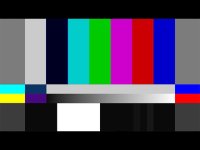
So long as you shoot the bars and capture them for 5 seconds of take before slate, you'll have something standard to NTSC to view in your scopes.

* Yes. I use the zone system even in video. You see, most folks don't realize that all light meters are designed to give a reading that amounts to 50% of black, AKA 'Middle Gray'- those are the two patches at extreme left and right along the bottom of the SMPTE bars.
 
* Yes. I use the zone system even in video. You see, most folks don't realize that all light meters are designed to give a reading that amounts to 50% of black, AKA 'Middle Gray'- those are the two patches at extreme left and right along the bottom of the SMPTE bars.

I've read that some of the Sonies 'want' to have the 18% grey card at about 40-45 IRE, rather than 50. I don't recall which cameras, but I was sort of surprised by that.

I suppose this is to give more 'head' room to the highlight exposures...

As for 'print your own', I've often wondered what exactly cost $800 or so for the 'official' test cards... other than high quality long lasting paints, individual comparison with standards, certificate NBS traceability, etc... even then $200 maybe...
 
Back
Top