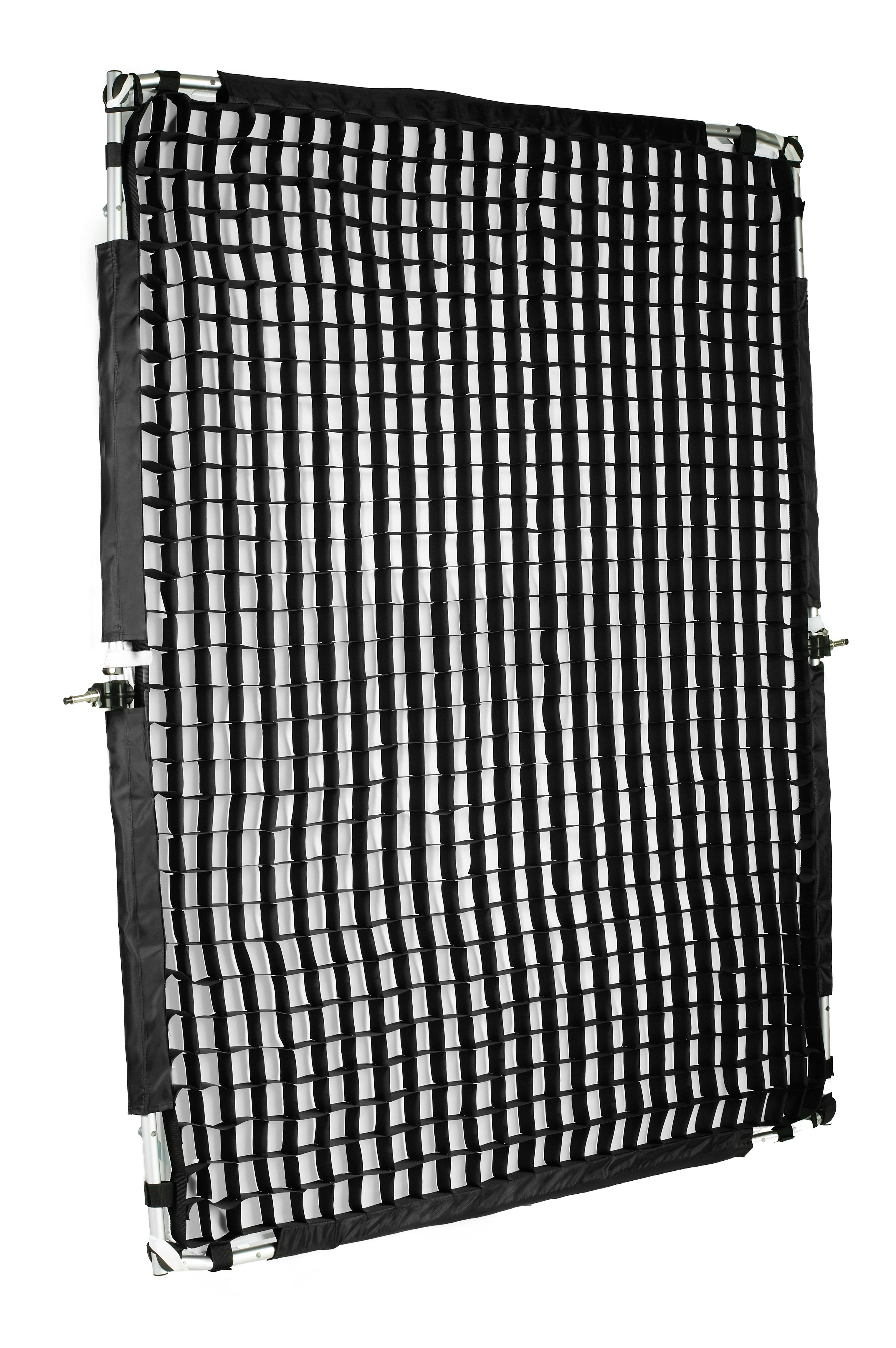
Collapsible 1/4, 1/3, or 1/2 stop overhead diffusion?

My gaffer has an 8x8' butterfly with at least one of these rags, but when I'm working solo sometimes I find a need for some overhead too (something that I can set up quickly by myself). I have a great collapsible ~5x7 diffuser from Phottix but it drops the subject by about 1.5 stops and I'm looking for something thinner. So far, no luck. Know of anything?
 
Last edited:
I don't see how 1.5 stops would be that much. Usually for an interview you're going to shooting wide open to throw the background out of focus 1/2 stop difference is pretty insignificant outdoors. Even if you could get something with less stops it would give you very little diffusion.
 
My gaffer has an 8x8' butterfly with at least one of these rags, but when I'm working solo sometimes I find a need for some overhead too (something that I can set up quickly by myself). I have a great collapsible ~5x7 diffuser from Phottix but it drops the subject by about 1.5 stops and I'm looking for something thinner. So far, no luck. Know of anything?
Intellytech makes their Fast Frame, which they advertise as 1/2 stop of diffusion.

 
I don't see how 1.5 stops would be that much. Usually for an interview you're going to shooting wide open to throw the background out of focus 1/2 stop difference is pretty insignificant outdoors. Even if you could get something with less stops it would give you very little diffusion.

For outdoors, I often prefer something that looks a little more naturalistic, where the subject isn't SO much darker than their surroundings.
 
Intellytech makes their Fast Frame, which they advertise as 1/2 stop of diffusion.


Thanks. I've been looking at that option as well as the Westcott Scrim Jim Cine. Buying just the fabric is an option but it's not exactly easy to suspend without a solid metal frame.
 
Thanks. I've been looking at that option as well as the Westcott Scrim Jim Cine. Buying just the fabric is an option but it's not exactly easy to suspend without a solid metal frame.
Yep, agreed. I've worked with the Scrim Jim Cine in the past and it takes a bit of snapping together to get the frame up and running. I haven't worked directly with the Fast Frame, but it does appear to setup very quickly once you've gotten it rigged up once. If I had to pick between the two personally I'd probably go with the fast frame for apparent ease of use.

Nice review here on it: https://www.newsshooter.com/2019/08...-diffuser-w-honey-comb-grid-diffusion-review/
 
For outdoors, I often prefer something that looks a little more naturalistic, where the subject isn't SO much darker than their surroundings.
A scrim is often used in combination with a reflector or light. The scrim takes down the highlights on the face and the reflector/light brings up the shadows which doesn't result in a dark subject. But I get what you mean you don't want too much diffusion. I think these scrim kits come a couple of levels of diffusion.
 
Last edited:
The lightest level of diffusion I use overhead is half soft frost. Can't tell you how much stop it loses but it's less than 1. This is more for a direct sun look that just has softer edges. Takes the harsh away. But not so much a beauty light. For legit diffusion I go to light grid, which is going to be more in that 1 to 1.5 stop range. The advantage when using stronger diffusion is that it spreads the sun source out, so even though it is knocking down level, the larger source can bring it back up somewhat. But as Peter said above, you still need to push back some return to bring the subject back up to the original stop. A good size bounce is a nice way to do this (and help the subject from not having to deal with looking into a challenging source that might make them squint).

This probably isn't something that most people here need to do, but I'll leave the recipe in this post anyway: if you are looking to replicate the look and level of shade, I use the half grid with a double net attached to bottom side. This diffuses and cuts the light down to where it properly matches the look of shade. The double net further scatters the light from the gridcloth which contributes to the ambient feel. But, note that I generally do this with at least a 12x12. It might work with an 8x8, but I don't think it would quite get there with a 4x4.
 
Charles makes a good point about the size. Usually an interview can take a couple of hrs and the sun can move a lot. The time it takes to setup then the interview starts then 10 minutes in direct light start to get around if your scrim is too small, you don't want interrupt interview to reposition.. For me most of this stuff you're going to have to learn by doing. If you have the time it's better if you run a test interview instead of working out the bugs of a new setup on a paid gig.
 
This probably isn't something that most people here need to do, but I'll leave the recipe in this post anyway: if you are looking to replicate the look and level of shade, I use the half grid with a double net attached to bottom side. This diffuses and cuts the light down to where it properly matches the look of shade. The double net further scatters the light from the gridcloth which contributes to the ambient feel. But, note that I generally do this with at least a 12x12. It might work with an 8x8, but I don't think it would quite get there with a 4x4.
That's a much better use of a net than struggling with one for the actual background.
 
Usually an interview can take a couple of hrs and the sun can move a lot.
Tracking and anticipating the sun path is crucial for anyone who needs to plan ahead, not just exteriors but even interiors with windows. Smartphones have made this scandalously easy (anyone else here used to wrestle with Sunpath software and a Suunto clinometer?!)
 
I've done tons of outdoor stand-ups and LS's over my career, solo... My Go-to's over the last 20+ years have been Chimera 4x4 and 6x6 collapsible frames with 1/4 grid. Sometimes I'll go full. But 9 times out 10, it was 1/4 grid.

6x6 Frame
4x4 Frame
6x6 1/4 Grid
4x4 1/4 Grid
6x6 Full
4x4 Full
This is also what I use although I find it slightly difficult to get a good grip on the tubular frame when it is used as overhead. But the quarter grid gives a nice semi directional look without needing to worry about too much light loss to look unnatural.
 
Back
Top