CharlesPapert
Director of Photography
EXCELLENT information Mitch, thank you.
How many cameras can access that menu? Is there a list somewhere?
How many cameras can access that menu? Is there a list somewhere?

Follow along with the video below to see how to install our site as a web app on your home screen.
Note: This feature may not be available in some browsers.

I don't think that's a slam-dunk choice, Mitch. Might as well just call the lens a T4 then.
Doc type shooting is one thing, you are constantly tweaking aperture for a given setup. No big deal. Even with this scenario however, if you are doing something as basic and typical as a headshot interview, you may be looking to throw the background out as much as possible, so you'll want to work under a 4. But then what happens if you need to snap in to a tight shot of hands etc. Sure, you could theoretically light to a 4 and then add an N3, or dial down the ISO etc. But then it's extra things to remember and plenty of opportunity to screw it up.
I had the same issue with the 30-300 when it came out. I could easily see it being used on a series or something where the director is calling mid-scene "punch in! punch in!" and the operator has to crane his head around to make sure he isn't pushing past the point where the lens will start to clamp down. You know that people are forgetting about that and footage is coming in underexposed by up to a stop for certain shots.
What I wish Canon had done is to add a mechanical plunger to the lens barrel, something along the lines of the macro button on ENG lenses. Stops the zoom at the limit of the minimum aperture, or you release the stopper to allow full range. Just helps to act as a reminder if nothing else.
It does exist, and once again I don't know anyone who does it. We have the ability in the background on the Odyssey7Q but the tool hasn't been developed for it yet. I put it low on our priority list because I just know no one will use it.Ahh that would explain it. I haven't used servo zooms much in modern times. So this would apply to the new lens, but not to the 30-300.
True about Aaton code. We always slated with Aatons like other cameras. It's amazing to me in this day and age that we are still at that game. Seems like we should have a system where the script supe enters the take info on a tablet which transmits to the camera as a visual sync frame plus simultaneous bloop tone to the audio mixer. Or does that exist?
Yeah, forgot to mention the modern Fujis can do this as well. Including the Cabrios.Mitch beat me to it about setting limits on the zoom. I have the same ability on my Fuji's, but it's much simpler.
We all want 'fast' glass, and the ability to make the decision to shoot at a large aperture if we want and not be limited by the lens design, but on a lot of sit-downs I've done, I've actually found myself stopping down beyond T4 so that the background isn't 100% gone.

It does exist, and once again I don't know anyone who does it. We have the ability in the background on the Odyssey7Q but the tool hasn't been developed for it yet. I put it low on our priority list because I just know no one will use it.
Did you know that you could enter fields such as Director, DP and location into the Alexa's metadata? It's right there on the camera's simple menu system. I don't a soul who has taken advantage of this. Maybe there's someone in Munich.
I don't think that's a slam-dunk choice, Mitch. Might as well just call the lens a T4 then.
Doc type shooting is one thing, you are constantly tweaking aperture for a given setup. No big deal. Even with this scenario however, if you are doing something as basic and typical as a headshot interview, you may be looking to throw the background out as much as possible, so you'll want to work under a 4. But then what happens if you need to snap in to a tight shot of hands etc. Sure, you could theoretically light to a 4 and then add an N3, or dial down the ISO etc. But then it's extra things to remember and plenty of opportunity to screw it up.
I had the same issue with the 30-300 when it came out. I could easily see it being used on a series or something where the director is calling mid-scene "punch in! punch in!" and the operator has to crane his head around to make sure he isn't pushing past the point where the lens will start to clamp down. You know that people are forgetting about that and footage is coming in underexposed by up to a stop for certain shots.
What I wish Canon had done is to add a mechanical plunger to the lens barrel, something along the lines of the macro button on ENG lenses. Stops the zoom at the limit of the minimum aperture, or you release the stopper to allow full range. Just helps to act as a reminder if nothing else.
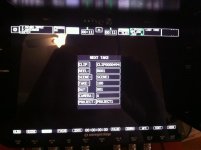
We do have this menu currently. When we've added more, no one ever uses it. And when we break from a cameras naming convention, everyone complains. Not far we can go here.Mitch, I've petitioned Sound Devices for this in their PIX recorders, but I think the same idea holds true for your Odysseys (and all digital cameras for that matter) - create a 'slate' option. A one-touch menu option that's right up there on your touch screen (so there's no dicking around to access it, it's just there, a click away): You press the button, a digital slate comes up, and you fill in your Production/Director/DP/Day/Night/MOS details - but more importantly, your Scene, Shot, Take details - then this data controls your file-naming in the recorder.
So Camera 'A', Scene 12, Shot 5, Take 4 of a production called 'Example' generates a file named "Example_CamA_12_05_04.mov", with the 'Takes' value increasing automatically each time you press record again, and the rest of the slate details embedded as metadata.
It still blows my mind that the development of file-based recording hasn't seen a clear and simple file-naming method like this developed around it. A clear file-naming structure like the above, would vastly simplify post-production for everyone. But I only think it'll work if access to the digital slate is one-touch button that can be accessed in a second.



The point is... you have no need for expensive gear to your budget beat or mimic any Ferrari in a speed limit area downtown ;-)Comparing a 24-105L to this Cine lens is like comparing a Sigma SLR prime to a Cooke S4.Just wondering out loud, how much better is this lens supposed to be than a 24-105 for example? I realise there is a way lower production rate with the cine-zooms but more than 30x the price is a lot to grasp!