Can you give me some lighting suggestions?

marvinhello

Well-known member
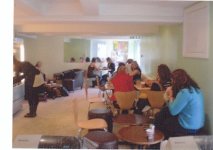
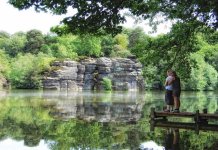
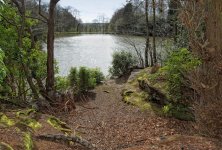
Hi all I'm currently planning a shoot in several locations and already done some recces, here are some photos from the location:
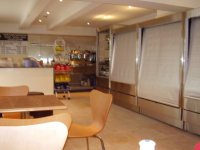
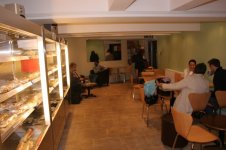
cafe miro 1.jpg cafe miro 2.jpg cafe miro 3.jpg


plumpton rocks 1.jpg plumpton rocks 2.jpg

One interior and one exterior, does anyone have any tips on lighting these scenes? the film is a melancholic drama with some romance involved.

Many thanks!
 
Rather than everybody suggesting a bunch of lighting scenarios which you may or may not be able to pull off, why don't you tell us what tools do you have at your disposal for these shots?
 
Last edited:
Rather than everybody suggesting a bunch of lighting scenarios which you may or may not be able to pull off, why don't you tell us what tools do you have at your disposal for these shots?

thanks. Due to budget we only have two LED light banks (312 led), three LED spot lights and two 110cm reflectors, two 80cm diffuser umbrella. plenty of filter/ND gels and cinefoil.

Those lights are daylight balanced to 5500k, I fixed the slight green/magenta shift by correction gels.
 
There are a million and one ways to light a scene. Without any idea of the mood that you want to set, or the shots that you're going to have, or even the time of day that you want to simulate, I'd find it hard to simply suggest random lighting setups, especially with limited equipment and limited information on the equipment - what's the light output of them, especially now they have gels over the top of them?
 
If this was my shoot, I would...

1- Work with the practicals for the indoor shoot, which would mean gelling any daylight windows to balance to the tungsten practicals ( it looks like there aren't many daylight windows to deal with ), unless you are shooting at night, where the outside light will likely be close to your tungsten balance. For character lighting I would look at using either 650 / 1000 watt fresnels through scrims that are close to your subjects but not in shot, or shoot-through small umbrellas ( I often use a Lowel 22 inch shoot-through umbrella with a Lowel Pro or Lowel DP close in as my character key light ), and have everything on dimmers so that you can balance the lighting ratios. I also use Lowel Tota-Lights to add broad fill light that is out of shot, this is either bounced off a neutral color ceiling or wall, or off of a large reflector surface. Again everything is on dimmers to get a natural looking balance.

2- For the outside shot, you are going to have to avoid direct sunlight unless you want the hassle of rigging a large overhead scrim to diffuse the light on your main charcters. You will also need to rig large reflectors for fill, or rent a HMI fresnel and generator, or live without wide shots that match the lighting of your medium closeups. ( i.e. diffuse and fill light with medium closeups where you can get away with smaller light sources, which will have to disappear when you cut to any wide shots ) Also watch out for green light/reflections from light being diffused/bounced by leaves on the surrounding trees. If you are lucky, you might get an overcast sky for the outdoor shots, which can provide you with nice looking soft light, but watch out for the blue cast. ( 6,000 - 8,000 K light balance )
 
One last thing... For the indoor shoot, you can also use large ( 60 inch or larger ) umbrellas for your fill light if there isn't enough room to rig a large reflector. The umbrellas can be either shoot-through ( very soft light, but they spill light everywhere ) or black-backed. ( which are more directional with little spill )
 
You will probably be better just sticking to the reflectors for the exteriors, assuming a daylight shoot. Do you have any photometrics for the LEDs? They will probably won't be strong enough to be useable in daylight.
A floor plan (room size, windows positions, practicals) and lights photometrics are the first 2 things you need to sort out before working on lighting ideas. :)

I second that. Knowing what ISO setting and F stop you want to work at, the photometrics of your lights and the dimensions of the set are the basics to me also. +1 also for using reflectors outside as the LED may not be powerful enough to help, except maybe very close up in deep shade.
 
You will probably be better just sticking to the reflectors for the exteriors, assuming a daylight shoot. Do you have any photometrics for the LEDs? They will probably won't be strong enough to be useable in daylight.
A floor plan (room size, windows positions, practicals) and lights photometrics are the first 2 things you need to sort out before working on lighting ideas. :)

Thank you all!

The info about the LEDs are:

Bean angle: 60
Power: 18.72w
Lux: 6850lux/50cm
 
So these might be useable in full shade, but they will probably be a bit too warm there - you will likely have more problems than benefits. In the open, don't bother: direct sun can be well over 100 000 lux, and even shooting in the sun (faces in shadow) you can have 20 000 lux or more from ambience. So the LEDs will only be a fraction of a stop even up close.

Depending on your target exposure, on how wide are your wide shots, how even light spread you need and how much of the background you want to light these might not be powerful enough for the interior. Supposing that there is no light coming in from the outside, consider using the small spots on the ceiling that are already present in the location and gelling the LEDs to match more or less, adding some punch here and there where appropriate. If you end up keying with the LEDs you may want to use some light diffusion, the individual leds don't really form a true soft source. Even something as light as Hampshire Frost may help get rid of some of the harshness.
 
Thank you all!

The info about the LEDs are:

Bean angle: 60
Power: 18.72w
Lux: 6850lux/50cm

What I suggest is getting to know the performance parameters of your lights. I did a post in another thread about photometrics that you might find useful.

http://www.dvxuser.com/V6/showthread.php?283890-800-1000-to-spend-on-lighting-gear/page2

Like I noted in that post, "...I recently took the time to do my own photometric charts for all of the lights that I own. I set up markers in my back yard, spaced 5 feet apart, out to 50 feet. At night, I set my lights at the marked off zero point and then measured the output, in footcandles (and F-stop at 500ASA since I am shooting with a FS-100 right now) at all of the 5 foot intervals (Using a Sekonic Studio Deluxe L-398 Light meter) out to 50 feet. I also measured the light output with the lights set up in several bounce light configurations and charted that out also. ..."

Now, if you do not have a light meter, you can still get a good idea of the performance of your lights without one. What I suggest doing is setting up a measured off distance and setting up your lights like I described. Without a light meter what you should do is then set up your camera and take an 18% gray card and take shoots of it at each of the measured distances. What you want to do is find an f stop setting at each distance that properly exposes the gray card. If you have a camera, or monitor, with a wave form monitor you want to expose the gray card so that it is at 50 IRE on the waveform. If you do not have a waveform monitor in the camera or in a monitor, you would want to use the cameras exposure tools that are available and the exposure the gray card the best you can. I would set the exposure, on each shot at each selected distance, and then would open up the aperture a few stops and close it down a few stops all while recording (I would take good notes and also call out the f stops and distances so that it is also on the soundtrack for reference). Then take the footage into your NLE and look at it with the scopes there. When you see the grey card expose at 50 IRE, chart that f stop. This would be a pretty good approximation of a reading from an incident light meter. When you are done you will have a chart of the photometrics of your lights that you can use for reference when designing light set ups.

EDIT: The suggestion for hitting the 50 IRE with the gray card is for reference only and is not a standard for exposure. Setting exposure for a given scene is much more nuanced. I would also suggest testing out the light using different types of diffusion, bounce configurations and or gels that you might think that you will be using. Also, once you chart out the f stops with the known ISO setting of your camera, you can figure the footcandles (Or a close approximation anyway) using the standard formula of 100 Footcandles at 100 ISO equals f2.8. Since this would be for your reference, you can just use the ISO/f stop at each distance with each light, what ever you want.
 
Last edited:
Thank you all!

The info about the LEDs are:

Bean angle: 60
Power: 18.72w
Lux: 6850lux/50cm

just as an aside... how does one read that spec... is that 6850 lx at a distance of 50 cm? So would that be 1700 lx at 1 meter? For the US, that wold be 685 fc at 1.5 feet (approx), and 170 fc at 3 feet.
 
just as an aside... how does one read that spec... is that 6850 lx at a distance of 50 cm? So would that be 1700 lx at 1 meter? For the US, that wold be 685 fc at 1.5 feet (approx), and 170 fc at 3 feet.

I saw that and was wondering... not in the mood for a math problem! So 170 FC at 3 feet will give you f8ish @500 ISO (According to the trusty Sekonic Meter). I just went over my notes and the closest light I recently tested with similar photometrics was a 250 watt open faced light that I measured at 160 FC at 5 feet (Also f8ish at 500 ISO). Because the 250 watt open faced light and an LED light are very different types of light (The 250 watt open faced light is a point source and the LED would be far from that), the photometrics at different distances I am sure would be different.
 
Last edited:
NOTE: When calculating the photometrics of your lights, always remember to factor in light loss from diffusion.

A 1K light can seem quite powerful when it's direct and bare at your subject, but diffusion can eat up 2 stops or more from your light source.
 
Back
Top