
Navigation
Install the app
How to install the app on iOS
Follow along with the video below to see how to install our site as a web app on your home screen.
Note: This feature may not be available in some browsers.
More options
You are using an out of date browser. It may not display this or other websites correctly.
You should upgrade or use an alternative browser.
You should upgrade or use an alternative browser.
Are there any film people? PLEASE POST HERE!
- Thread starter deedive
- Start date


MaxZenk
Active member
Thanks, nice that you like them!
It's always good to have a chick like that at home.
I really enjoyed doing analog, there's just so much you need to concentrate on... if you screw up, you find out 3 days later, when it is way too late. No way to check framing of the picture you just did... did she blink? did I actually push the exposure-lock button?
Really teaches you some good stuff...
Also I had to cut out the negatives and put them into a slide frame for scanning. I cut them out with our kitchen scissors and I was shaking... screw up and everything is gone...
Not the proper way of doing it, I know, but sometimes there are no better ways.
When I had the negatives scanned, I was really surprised:
They looked completly different than the prints, and this although I did not have and "pictureenhancement" or stuff like that done.
I think the scanner screwed up, or what could it be?
It was really hard to get the colours like the ones on the print...
Also what I don't get:
Isn't film 24 x 36 making it a ration of 2:3
Why are the negatives wider then?
And why do they offer 9 x 13 cm (sorry, european ) prints at all, which obviously cut off some bits?
Can anyone help me out with that?
It's always good to have a chick like that at home.
I really enjoyed doing analog, there's just so much you need to concentrate on... if you screw up, you find out 3 days later, when it is way too late. No way to check framing of the picture you just did... did she blink? did I actually push the exposure-lock button?
Really teaches you some good stuff...
Also I had to cut out the negatives and put them into a slide frame for scanning. I cut them out with our kitchen scissors and I was shaking... screw up and everything is gone...
Not the proper way of doing it, I know, but sometimes there are no better ways.
When I had the negatives scanned, I was really surprised:
They looked completly different than the prints, and this although I did not have and "pictureenhancement" or stuff like that done.
I think the scanner screwed up, or what could it be?
It was really hard to get the colours like the ones on the print...
Also what I don't get:
Isn't film 24 x 36 making it a ration of 2:3
Why are the negatives wider then?
And why do they offer 9 x 13 cm (sorry, european
) prints at all, which obviously cut off some bits?Can anyone help me out with that?

pest22o
Well-known member
Hey guys... 7 pictures of my first 35mm project.
Film: Fuji Superia 200
Camera: Nikon F3
Lens: Voigtlaender 58mm 1.4, Nikon 85 1.4
Shot with available light and a reflector, negative scanned on a Nikon LS-2000
Please let me know what you think, criticism always welcome, I am eager to learn!
Ah, I forgot: This was in a photography class, portraitures, topic: "The day I told her"
Thanks,
Max.
I love them all especially the last one.
Ric O'Shea
Member
Max, those are some nice shots. It's refreshing to me that people are still rocking film and it's beginning to make a come back as people tire of the banality of digital. Granted, I use digital all week (I shoot for a newspaper) but when it comes to my personal work it's 99% film. I love the weekends when I can break out one of the multitude of film cameras laying around my apartment (my personal favorites being my 2x3 Graflex, my Holga, my 1950's Brownie Hawkeye, and Nikon N80).
I shoot almost exclusively chromes and b/w negs. I process my own b/w film in my apartment and have to drive about an hour to get my slides done. More work and more cost...of course. But I love the anticipation of seeing what I've shot and I really enjoy doing my own processing. I don't see it as a chore but as a craft that I've worked at very hard. Granted, digital makes my daily workflow much, much faster and allows me to make changes as I shoot but I find the results from a film take to be far superior. Film challenges me and really makes me concentrate on my shots. Digital makes me lazy.
Someone asked awhile back about an analog workflow. In the short time that I did film for work, here's how it went:
-We shot on color negs (Fuji Press), cracked them open in the darkroom and spooled them on stainless reels (something I suck at), loaded them in the processor and hoped for the best (she was a finicky beast), wait 12 minutes, pull them out and throw them in the film dryer.
-Once the negs were done we loaded them into archival pages, threw them on the light table and looked at the shots through a lupe.
-After we decided on which ones we wanted they were scanned and toned through PS.
This was a significant workflow improvement over the olden days of paste-ups and actually making prints in the dark room. I never got a chance to do that but it's always fun talking with guys that basically lived in the darkroom.
Max, you ask why your scans look different than your prints. When you take film to a photo lab they use calibration strips to setup their machines for the particular type of film you're using. Most processors, especially one-hour labs, work on the assumption that it knows better what your pictures should look like over what you actually want. If people got prints of what their disposable cameras actually shot they'd probably throw them in the garbage. The processors work to neutralize blown highlights, crushed shadows, and remove color casts. If you shoot print film with filters and such on and then take it to an average lab, the processor will automatically remove those colors to make it look like normal daylight.
When you scan images yourself, your scanner isn't automatically doing that processing. Some high end scanning software will allow you to tell it what film you're using and it will make those compensations.
As for print sizes, a standard 35mm frame is a 2:3 ratio. However standard print sizes don't exactly match that. A common size here is 8x10 inches which crops out part of the picture. At least 8x12 is still an option. Most times I will size the picture in PS to what I want (keeping the proper proportions) and have them print it on an 8x10 sheet (so that it has borders which make it easier to matte and frame).
Hope this was useful.
MaxZenk
Active member
Hey guys, thanks for the feedback!
The last one is my favorite as well. This is the shot that inspired me to do the series. And it really makes me humble, since that was a spontaneous shot (at least staged by me ) on the very top of Eifel tower in Paris.
Ric, thank you very much for your insight, it was really helpful indeed!
I have one additional question as for the workflow:
How do you tell a shot to be good from the negative, I mean really negative, not reversal film... and how do you tell it it's really in focus?
Or is it basically about the composition, how you make your seletion and then look at colors (of course) and sharpness afterwards?
As for the lab, this is what is still confusing me:
I paid quite a bunch to have the film processed at a in-house lab, doing the prints also with the negatives and not scanning and printing them. Because I wanted to avoid any kind of this processors.
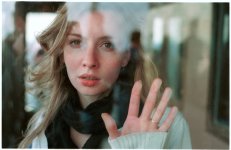
The thing is, the prints really looked like in the situation and how I intended it to be... but the negative scans did not, I attached the scan of one picture.
I guess I need to practice scanning a bit more?!
And photography...
The last one is my favorite as well. This is the shot that inspired me to do the series. And it really makes me humble, since that was a spontaneous shot (at least staged by me
) on the very top of Eifel tower in Paris.Ric, thank you very much for your insight, it was really helpful indeed!
After that project I really understand what you are saying there. And as a beginner lke me this is a far superior way for learning.Film challenges me and really makes me concentrate on my shots. Digital makes me lazy.
I have one additional question as for the workflow:
How do you tell a shot to be good from the negative, I mean really negative, not reversal film... and how do you tell it it's really in focus?
Or is it basically about the composition, how you make your seletion and then look at colors (of course) and sharpness afterwards?
As for the lab, this is what is still confusing me:
I paid quite a bunch to have the film processed at a in-house lab, doing the prints also with the negatives and not scanning and printing them. Because I wanted to avoid any kind of this processors.
The thing is, the prints really looked like in the situation and how I intended it to be... but the negative scans did not, I attached the scan of one picture.
I guess I need to practice scanning a bit more?!
And photography...
Attachments

Ken K
Well-known member
Oh man, you just took me back about 12 years to college. I kinda forgot about that whole processing process and it all just came back to me with "spooled them on stainless reels". Fond memories of trying to do that in the dark... lol. Man I miss that b&w photography class. It was my most favorite class in college.cracked them open in the darkroom and spooled them on stainless reels (something I suck at)
Now you make me want to set up a darkroom. Thanks a lot!
WaveRiderXIX
Well-known member
I always shoot with my 35mm Lomo!!!
This particular one is the color splash.
I use Fuji 400.
Love this thing. I can get looks off this camera that I could never pull off digitally, without the need to throw into photoshop work. The only hassle is getting it developed, that and 2/3 of my pics always come out messed up. (Still trying to perfect the timing of holding down the trigger in different lighting situations)
This was straight up from Costco's scans.
http://gallery.mac.com/philipcuenco/100448/00370005/web.jpg
http://gallery.mac.com/philipcuenco/100448/00360020/web.jpg
http://gallery.mac.com/philipcuenco/100448/00370014/web.jpg
Last edited:
Ric O'Shea
Member
Negs are tough to sift through to find the good shots. Getting a small contact sheet made makes life much easier when it comes to good color. That being said, I've always used a 10x lupe and a light table. With the magnification it's easy to spot the ones that are sharp. Beyond that it takes experience. The orange cast of the negatives and the inverted colors make it a challenge so instead I look at the density of the image (which is indicative of good exposure. I just like to trust that the colors are there too.) The nice thing about print film is the huge latitude, especially on the overexposed side. Even if it looks completely washed, you can normally pull some detail from it. I also look for good composition and potential crops.
One thing you can do is look at the negs of good prints and compare them to negs of less than spectacular prints. It will give you an idea of what to look for when editing.
One thing you can do is look at the negs of good prints and compare them to negs of less than spectacular prints. It will give you an idea of what to look for when editing.

Zim
Veteran
You can still buy film?
No really my 35mm film days are over. It was fun and and have boxes and boxes full of old pictures and negatives to prove it. No for me it is going to be Nikon Digital SLRs all the way. I can take a picture, edit it and then print it at home all in the same day.
But I sure miss the way some of the slide film used to look. Film is awesome but just not for me anymore.
Zim
Veteran
You can still buy film?
No really my 35mm film days are over. It was fun and and have boxes and boxes full of old pictures and negatives to prove it. For me it is going to be Nikon Digital SLRs all the way. I can take a picture, edit it and then print it at home all in the same day.
But I sure miss the way some of the slide film used to look. Film is awesome but just not for me anymore.
]

Hans Moleman
Carbonite Member
Kodak e100g


Adam Gonzalez
Well-known member
I would shoot film if I could afford processing. I love film especially Kodak Vision 2 and 3 stocks....mmmm!!!! And nothing gets past the old black and white and standing in a dark room for hours trying to get the right pull out of the clouds and dodge of the eyes on a pic. Film will always be around and will never be out dated, it will only get better. Features, commercials, documentary, etc will still shoot on film, old school and new school photographers will still shoot film. There is way to much latitude (11 stops holy s**t) in film that we are only still trying to achieve with our 1's and 0's like after_effects tryin to defend his Fuji S5 Pro (4 stops maybe).
i heart film!
i heart film!

deedive
Well-known member
i heart film!
me 2

One Way PhotoVideo
Carbonite Member
as much as I love my D70 setup, I always admire a good Medium format shot