Anyone shot on Super 8?

thematthewbone

Well-known member
I would just like to hear if anyone around here has shot/have any experience with Super 8. And if so? How do you feel about it?
 
Shot a bunch of short films on Super-8 back in the late 80's/early 90's, and while I was excited to actually be shooting film, I found it a less-than-stellar format to work with. Back then, the only available stocks were reversal (at least as far as I know), which meant far less exposure latitude than negative film, the small image size produced pronounced grain, and it was a nightmare to physically edit -- hard to eyeball the frames, difficult to make splices that wouldn't jump badly in the projector, impossible to keep track of small trims. And telecine was quite expensive.

A lot has changed since then; negative stocks are available, as are high-quality transfers (though the price of those hasn't changed much), but I'd rather shoot cleaner DVX or HVX images than Super 8, especially given the cost of the film and processing in comparison to shooting DV and even HD (on the HVX).
 
Shot a lot of Super 8, and was a rabid collector of Super8 cameras, at one point I have had all the best Super8 cameras.

It's a very cool format for what it is, but it is not in any way what it isn't. Might sound confusing, so let me say it a different way: don't go thinking you're going to fool anyone into thinking your footage is going to look anything like 16mm or 35mm. Don't think Super8 is going to look sharper or clearer or crisper than HVX or even DVX footage.

Super8 is a niche format, and in that niche it's wonderful. The grain, the grit, the color saturation of Kodachrome, the rich blacks... it's cool. The dust and hair and scratches and gate weave -- there's nothing else like it.

As Stas said, it's really tedious to work with, but there's nothing like cutting your film (and actually CUTTING the FILM) and taping it together with splice tape and projecting it. Or doing special effects like lighting by actually scratching the film frame-by-frame...

... with that said, there are several reasons Super8 is not widely used anymore, and 24p video is. Super8 is very cool for a niche thing, for an art project etc., but you wouldn't want to use it as a general-purpose format.
 
Last edited:
I love Super8...hence the name!

I use it almost daily...The format is just wonderful (my own opinion) and the richness of the film is unbeatable. Eventhough I love my DVX...there is something about super8 that cannot be duplicated. Heck...my business partner and I have a whole business based on the format....

Check out:

http://www.offbeatclips.com/

all volumes with the exception of "God is Good" was shot on Super 8

cheers!
 
ya

ya

Super 8 is super fun! ha. I have an ELMO XL with a macro lens. Very fun stuff, different stocks, although so disappointed with Kodakrome going obsolete. I was part of GLOBAL SUPER 8 DAY. It was to comemorate the 40th aniversary of KodaKrome 40. Forty countries around the world had a super 8 festival with 40 arists in them. The one i was in, in chicago people even brought 40's (beer). Was fun. Check out my website for the video titled "MICKEY FACTZ- BE FREE" that was partly shot in super 8.


Great to see people supporting a great format/camera!

-NOAH S
 
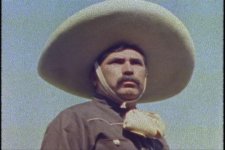
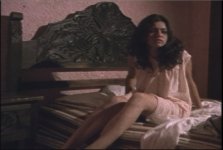
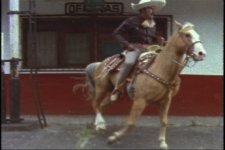
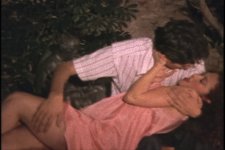
I produced and co-photographed a 22 minute film shot on KODAK Vision 2 stock. The film was developed and transfered to miniDV and edited in final cut pro. The story is the merging of two plots from two old mexican movies (one silent and the other Mexico's first sound film). So, to get an unusual look that somehow might honor the era, the choice was made to use super 8mm. The results where definetly very cool (just my opinion, of course).
 

Attachments

  • Picture_1.jpg
    Picture_1.jpg
    127.1 KB · Views: 0
  • Picture_9.jpg
    Picture_9.jpg
    95.9 KB · Views: 0
  • Picture_6.jpg
    Picture_6.jpg
    101.5 KB · Views: 0
  • Picture_3.jpg
    Picture_3.jpg
    102.5 KB · Views: 0
  • Picture_11.jpg
    Picture_11.jpg
    95.8 KB · Views: 0
Those are some very nice grabs...

I am in preprod on a short and the story just seems like something that could be told in super 8 instead of DV and it wouldnt diminish the story at all...I actually think it would fit the story even better.

I am still up in the air though. I just had a long talk with my DP who has worked with Super 8 before and he said simply enough that "its your film, your vision, but just remember that although the reward may be double so is the pain."

I have never worked with anything but DV so it just seems like an interesting way to go about this project. If nothing else it will always be a learning experience I suppose.

ps anyone have any synching tips for the audio track?
 
Super 8 rocks. I used to run the Super 8 Militia in San Francisco. Once I get my M2 for my HVX200 I'm going to attach it to my JK 104K Optical Printer and see if I can make HD transfers.
 
thematthewbone said:
I have never worked with anything but DV so it just seems like an interesting way to go about this project. If nothing else it will always be a learning experience I suppose.
That it would be, and a highly recommended one. It will be a pain in the patootie for someone who's only ever worked in video, but a valuable learning experience. Especially when you realize you only get 2 minutes and 30 seconds out of each cartridge of film, and those carts will cost you something like $40 apiece to buy, process, and transfer (assuming MovieStuff.tv transfer at $15 per 50-foot roll).

ps anyone have any synching tips for the audio track?
Your audio isn't going to sync no matter what you do. All Super8 cameras are "wild" sync, meaning they run at vaguely/approximately/sorta 24fps. You'd need a crystal-sync camera to get sync sound, and the only one that does it is the Beaulieu, and even then you'd have to get a 6008PRO/7008PRO/9008PRO with the proper crystal sync chip.

So -- point is, you're not likely gonna have one of those, and so your sound won't sync. So be creative about it. Work around it. Don't plan on having long dialogue takes because your audio won't sync, so plan for lots of cutaways, lots of silhouette shots, whatever you have to do to work around the audio issue. Watch "El Mariachi", the whole thing was done on a non-sync Arri 16mm camera, and you'll see how he dealt with the audio sync issue.

Also, Super8 cameras are *noisy*! Especially the Beaulieus. Certain cameras are quieter, but you're going to have issues with camera noise. Yet another obstacle to overcome. Rodriguez got around it by not recording audio at all during the filming. He would run a second take after the camera stopped, having the actors duplicate their lines as best they could, and then he tried to sync up in post (which of course didn't work, but then again no other method would have worked either, so at least this way he didn't have camera noise in his audio tracks!) You could try VocAlign though, that's a recently-developed program that might make it easier to sync up.
 
barry, you are a lifesaver.

i was reading about the crystal synch but i am planning on shooting on a canon 1014... anyways, i will definately re-watch "el mariachi" with a new purpose.

thanks for the advice.
 
Barry_Green said:
That it would be, and a highly recommended one. It will be a pain in the patootie for someone who's only ever worked in video, but a valuable learning experience. Especially when you realize you only get 2 minutes and 30 seconds out of each cartridge of film, and those carts will cost you something like $40 apiece to buy, process, and transfer (assuming MovieStuff.tv transfer at $15 per 50-foot roll).

Agreed. It's a world of difference shooting something when you're paying so much for so little, vs. getting an hour of footage for $6 of raw stock. Naturally, I much prefer the latter, but then I grew up shooting video.

It's funny, I came to Super-8 after having shot tons of half-inch consumer video back in high school, and I was thrilled to finally be shooting film, but at late 80's prices -- maybe around $20-$30 for one roll plus processing -- I had to abandon my beloved large shooting ratios on VHS -- usually 10:1 or higher -- in favor of something far more economical, mostly a 1:1 ratio. Recently unearthed a old transfer of dailies from one of my first Super-8 shorts, and almost every shot and take was used in the finished film. The only time we ever re-did anything was if an effect didn't work (it was a horror short with lots of blood and some squib effects).

Still, while there's certainly much to be learned from having limited stock, and having to be judicious about how much you shoot, I found that working with VHS in my youth as a burgeoning filmmaker was much more conducive to helping me learn about composition, coverage, and editing, simply because I could shoot so much -- different angles, different focal lengths, etc -- without spending a lot of money. Then when I shot on film, I was better prepared to know what I wanted (though I did shoot pre-vis footage on video and planned almost the entire short that way).
 
I think working with Super 8 will help you understand something about shooting using a film camera, but other than a learning experience I personally think Super 8 looks quite ugly!

I'd definitely shoot in digital over Super 8! I don't even know why people are still talking about Super 8 ;)
 
omar_ said:
I'd definitely shoot in digital over Super 8! I don't even know why people are still talking about Super 8 ;)

Because it's different. And because it's a clunky, difficult workflow, that in and of itself makes it appealing to some people, those who want to do something different and work in a different way. It's a different look and a different workflow, and sometimes you just have to break conventions...
 
I would get a really good transfer with an good colorist behind the wheel. Specify "best light" and the colorist will go through scene by scene and adjust the timing per shot. It's great. And it's amazing what they can pull out of what appears to be worthless negatives.
 
thanks for all the advice guys.

i am going to shoot on super 8. still on the hunt for a DAT recorder. I am contemplating just capturing the audio track using DV and using a lot of cutaways, and long shots for the longer dialogue sequences considering synching will be hell.

thanks again.
 
" Specify "best light" and the colorist will go through scene by scene and adjust the timing per shot"

if you want scene to scene CC then you ask for scene to scene color correction NOT a best light ... when you look at prices you'll see one light, best light and scene to scene ( the most expensive) ....
 
Love super 8. Half of Oliver Stone's "Natural Born Killer" was shot in super using a Beaulieu camera. Beaulieu is considered the Rolls Royce of super 8 cameras.
 
Back
Top