Alternative to spendy Redhead windscreens

Listen, I don't want to turn this into a pissing contest, here, and I'm not going to use this thread to try and pimp a product any more than I probably shouldn't have. I was just trying to give useful information to people, as you are giving mis-information to people, and I am trying to clear it up.

I am certainly not giving mis-information. I'm just saying it as it is, as there is a lot more in the design of windshields and suspensions than most people realise.

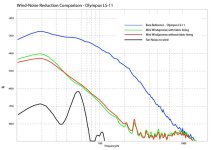
Rycote certainly make available their tests - the one about HF loss is HERE. This is a measurement for their cover for the LS-11, but would hold true for any similar cover.
260417_10150269352376774_110469726773_8730885_3340150_n.jpg

If you do use a lining you have to get it right, as a bad lining will change the frequency response; but the lining itself is not that important - as you can see from the graph.


PS - Reading the Tester's Conclusion at the end (see link above) I am pretty sure that the tests have been done by an Independent Consultant for Rycote and not by Rycote themselves.
 
Last edited:
Right, and what I'm telling you, as a manufacturer, is that your assumption that lining isn't important is incorrect. I don't know what lining Rycote uses, or if they make it themselves. What I can tell you is that I've made windscreens with our lining, without it, and with something cheap that looks pretty, and all I have to do is use them at the same time on a windy day and know which one works better. As I said earlier, Manfred had to spend a lot of time sourcing the right material so that it would be acoustically transparent and still work. The stuff isn't cheap, and it's not easy to get, but in Manfred's opinion, it was worth the cost. We use it in all of our wind protection products. Anyone who knows Manfred will tell you he vetted every material K-Tek uses personally (until he passed away), and the guy was a stickler for detail (he helped develop timecode for production use, along with Mike Denecke).

You are right, there is a lot more to windshield/wind protection products than most people realize, and not every manufacturer does the same thing, which is why making sweeping statements that "lining doesn't really matter", when you don't know what every manufacturer uses and why they use it is giving mis-information.

Sorry to everyone else out there that this has gotten off topic. That wasn't my intent. My original intent was to make people aware of a small detail about wind protection that many people don't even know about...or care about.

I think we will have to finish it here and agree to disagree.

I certainly don't post on just "assuming" something and it's good that you do your own research.

But, surely, the hairy cover should have worked before it gets down to the lining. As you know, wind protection is down to the volume of still air that you trap round the microphone and a lining does not add to that volume; it should therefore not have any beneficial effect - though it may have a detrimental effect if you use the wrong material.
 
Reminds me of years ago when we would have heated discussions about which brand of toilet paper, and how many layers to use when taming the highs on Yamaha NS10's.
 
But, surely, the hairy cover should have worked before it gets down to the lining.


This I will agree with. We look at the lining as a "last ditch effort", and even then, it's not impenetrable. As is the case with any wind protection, sometimes the wind is so high that it doesn't matter what you use.
 
Back
Top