All softbox lighting.

It's not really a question which can be answered. Your lighting setup depends entirely on the needs of your script and your artistic intent, which at this point, only you know. Three soft lights might be totally appropriate, or they might be totally inappropriate.
 
That's why I'm asking questions so I can do better. Why do you think I'm here? The only reason I do just jump in is because everyone I work with is on a tight time limit because they're doing it for free and I have to respect that. So, I rush. This time around, I have more time to plan.

It's not really a question which can be answered. Your lighting setup depends entirely on the needs of your script and your artistic intent, which at this point, only you know. Three soft lights might be totally appropriate, or they might be totally inappropriate.​

Well, what are softboxes usually used for? I like the "diffused" look that Collateral had, if it was in fact diffused. I'm quite green to lighting so I'd like to know what I should get and learn in a "no-to-low budget world."

This is Collateral, if you haven't seen it:
 
Scenes in the cab were done with led panels velcroed to the ceiling of the car.

Soft lighting scenes looks like the basic HMI through diffusion.

Others are tad harsher to simulate street lights.

As others had pointed, lighting is all about need, if you're new into lighting get a book called Motion Picture and Video Lighting by Blain Brown, then get another book called Cinematography by the same author.
 
Se7en used extensive soft and flouro lighting

That's cool to hear. I loved Se7en.

Scenes in the cab were done with led panels velcroed to the ceiling of the car.

Are those expensive? How would you light a car scene at night without those?

Soft lighting scenes looks like the basic HMI through diffusion.

I don't know what this means.

As others had pointed, lighting is all about need, if you're new into lighting get a book called Motion Picture and Video Lighting by Blain Brown, then get another book called Cinematography by the same author.

No dough for books. I'll try to find them at the library.
​
 
The library sound like a great idea. If you have no money for books you are going to have a hard time affording decent soft boxes, lite panels or HMI's. Slow down, take some time to learn.
 
Judging from your video you posted. I'd suggest starting small. Practice setting up scenes with just practical lights.

I've just started learning to light myself, even though I've been working on a feature film set for a year, and have been on film sets before and seen it done.

It took me several attempts before I was able to get this. This was done with ONE 75w incandescent light bulb in a adjustable desk lamp I just had lying around. Before that I was trying to light the scene with my production lighting, and it was just too much light. You can do alot with a little. Now your HV20 isn't going to pick up light as well as my T2i does. I have an HV40 as well, and you need about twice as much light for everything you shoot with it, vs. my DSLR. But, you can borrow some shop lights from a friend to get alot of light for cheap. We used them alot on my feature for fill light. You will need to diffuse them most of the time though, because the light they produce is extremely harsh. You can also, buy a few CFL bulbs at the right color temp, and stick them in any household socket.

jtbejr.png
 
three point lighting with three softboxes and that's all... but I get the feeling this is a bad idea... and I don't know why. Anyone care to explain?

It will look like the first 40 seconds of your Raspberry video. That was an overcast day, so soft light coming from every direction.
It sort of works because your eyes can easily distinguish between the person and the background,
but in a more complicated scene, the result would be quite flat, devoid of depth. So that's the main effect of using soft lighting exclusively.

The other problem is that softlights go everywhere; there's no way to control them. So, for example, if you want a dark wall behind a lit person,
it might be impossible, because the light on the person will spill onto the wall.

OK, if you want to learn about lights, there are lots of free resources online. Try "lighting for video" in Google.
Here's one I think you might find useful:
http://www.studiolighting.net/studio-lighting-cheap/

Another thing you can do is just get a bulb and some kind of scoop and some paper for diffusion,
and play around.
 
Last edited:
It took me several attempts before I was able to get this. This was done with ONE 75w incandescent light bulb in a adjustable desk lamp I just had lying around. Before that I was trying to light the scene with my production lighting, and it was just too much light. You can do alot with a little. Now your HV20 isn't going to pick up light as well as my T2i does. I have an HV40 as well, and you need about twice as much light for everything you shoot with it, vs. my DSLR. But, you can borrow some shop lights from a friend to get alot of light for cheap. We used them alot on my feature for fill light. You will need to diffuse them most of the time though, because the light they produce is extremely harsh. You can also, buy a few CFL bulbs at the right color temp, and stick them in any household socket.
Do a lot with a little. That make sense. I'm thinking of getting a Canon t2i once I have dough. So, I'm thinking I should get one softbox and perhaps do the fill and back light with some lamps with CFL bulbs instead. What's the "right" color temp?

The other problem is that softlights go everywhere; there's no way to control them. So, for example, if you want a dark wall behind a lit person,
it might be impossible, because the light on the person will spill onto the wall.
Can't you control the intensity of the softbox light?

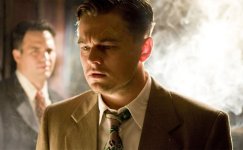
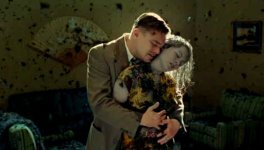
I really liked the lighting in Shutter Island. Could I emulate the lighting with a softbox? I noticed from this film ( and a lot of Scorsese's films) the hairlight is pretty visible and it looks damn good. Can that be achieved with two or three softboxes? Or what would I have to get (within means)?

shutter_island_01.jpg
Shutter-Island-trailer.jpg

OK, if you want to learn about lights, there are lots of free resources online. Try "lighting for video" in Google.
Here's one I think you might find useful:
http://www.studiolighting.net/studio-lighting-cheap/

Thanks.
 

Attachments

  • Leosfaces09-6-11-8.jpg
    Leosfaces09-6-11-8.jpg
    30.7 KB · Views: 0
The first question I would have to ask is "Why softboxes"? Is there a particular reason that you want to use them? The softbox is not a particularly mind-blowing tool; you're just taking a point light source and spreading it out over a larger area, resulting in a "softer" light spread. Go outside on an overcast day and there you go, that's what a bunch of softboxes would look like. You can duplicate the effect by using a shower curtain in front of any light; it's not magic or anything.
 
The whole point here is to be able to "control" the light.. which you cannot do that well with softboxes. You need a variety of lights to control light well. They don't need to be expensive, just a variety.
 
Can't you control the intensity of the softbox light?

It's not about intensity control. It's about spatial control. You put a Fresnel as a backlght
to outline the hair and that's all it does. If you use a soft source, you might find that it
spills onto other parts of the set and fills the shadows more that you'd like.

That said, it is more difficult to control the intensity of a softbox. There's not usually
a place to insert a scrim, so your only option is to use a dimmer, which changes
the color temperature.

Since you're so obsessed with one type of instrument, you might find this interesting.
Using 3 beauty lights to do a shot:
http://www.kenstone.net/fcp_homepage/bring_on_glamour_brockett.html

I can think of another situation where 3 softboxes might be useful: greenscreen.
The screen must be lit very evenly, so a softbox or 2 works great. If the
design of the shot requires a soft light, then you can add a couple of softies
for the key, etc. On the other hand, if the final composite is going to place
the actor in bright sunlight, then you have to use a hard light for the talent
(to imitate the sunlight), while keeping the softlights on the screen.

Let me repeat an idea I mentioned earlier. Go to your local hardware store,
and buy two or three cheap clamp lights. Get some diffusion material--paper,
shower curtain, whatever--and play. See what kind of effects you can get with
hard light vs. softlight.
 
The first question I would have to ask is "Why softboxes"? Is there a particular reason that you want to use them? The softbox is not a particularly mind-blowing tool; you're just taking a point light source and spreading it out over a larger area, resulting in a "softer" light spread. Go outside on an overcast day and there you go, that's what a bunch of softboxes would look like. You can duplicate the effect by using a shower curtain in front of any light; it's not magic or anything.

Don't know much about lighting. I like the diffused look that I assumed softboxes offered. I'm what you call a filmmaker-at-heart, but-really-a-struggling-screenwriter-who's-had-enough-of not-getting-his-stories-optioned-and-now-is-looking-to shoot-his-scripts-on-micro-budget kind of guy. :)

Since you're so obsessed with one type of instrument, you might find this interesting.
Using 3 beauty lights to do a shot:
http://www.kenstone.net/fcp_homepage..._brockett.html

It is interesting, but it actually cost more than the softboxes and it's 60 watts (or I may have read it wrong). I'm looking to buy softboxes from Cowboy Studios, which is a 1000 watts softbox.

Let me repeat an idea I mentioned earlier. Go to your local hardware store,
and buy two or three cheap clamp lights. Get some diffusion material--paper,
shower curtain, whatever--and play. See what kind of effects you can get with
hard light vs. softlight.

I actually kinda did that for the video I posted. I bought a lamp from IKEA and put diffusion material in front of it. I wasn't impressed. But clamp lights might be better. I can actually plug 1000 watts into my wall or will that burn down my house?? That's another thing I need to learn -- what can a normal plug outlet take and for how long?

You put a Fresnel as a backlght
to outline the hair and that's all it does. If you use a soft source, you might find that it
spills onto other parts of the set and fills the shadows more that you'd like.

Hmm. Thanks for the heads-up. What if I use a hard light from a lamp to outline the hair instead?

And kudos for all the feedback. I am learning!
 
What's the "right" color temp?

The right color temp is any temp that's the same for the lights and the camera.
That's why you do white-balancing.

If you're working with sunlight streaming through the window, any additional lights
will have to be daylight temp (about 5200°K), or you'll have to CTB filters on
warmer lights.

If you're working indoors, the standard is 3200°K.
 
Don't know much about lighting.

Which is why you should study the subject systematically instead of asking random questions. :)
Seriously, there are a lot of excellent resources out there.


what can a normal plug outlet take and for how long? .
Most grips figure a 100W lamp uses 1 amp.
(It's actually 100W/120V=.833, but going with 1 amp makes the math easier and gives you a safety factor.)
Now look at the breaker panel in your house. A typical home breaker is 15 amps.
That means you can run 1500 watts off that circuit. All day.

But before you max everything out, systematically go through your house and your outlets, turning off each breaker,
one at a time, to make sure you know everything that's connected to the breaker.
So if you've got a 1000 watt light and you hook up a hotplate to make some tea,
you've got to add the wattage of the hotplate if it's on the same circuit.


What if I use a hard light from a lamp to outline the hair instead?
Sure, that could work. Why don't you just give it a try? See how the hair looks with whatever light you have
as a backlight. Now check how that backlight spills elsewhere. Is it problem? Experiment.
 
Last edited:
The right color temp is any temp that's the same for the lights and the camera.
That's why you do white-balancing.

If you're working with sunlight streaming through the window, any additional lights
will have to be daylight temp (about 5200°K), or you'll have to CTB filters on
warmer lights.

If you're working indoors, the standard is 3200°K.

I gotta look up kelvins. So CTB filters are those gels, I assume. And if the sun is giving me too harsh of a light through the windows, I gel the windows?

Which is why you should study the subject systematically instead of asking random questions. :)
Seriously, there are a lot of excellent resources out there.

Why read articles and read books first, when I can I ask actual people who do it? lol.

Sure, that could work. Why don't you just give it a try? See how the hair looks with whatever light you have
as a backlight. Now check how that backlight spills elsewhere. Is it problem? Experiment.

I'll get my lab coat and start.
 
Don't know much about lighting. I like the diffused look that I assumed softboxes offered. I'm what you call a filmmaker-at-heart, but-really-a-struggling-screenwriter-who's-had-enough-of not-getting-his-stories-optioned-and-now-is-looking-to shoot-his-scripts-on-micro-budget kind of guy. :)

Several of the examples you put in your first post, have 'complex' lighting setups. One definitely shows perhaps a 'soft' frontal light, a high to the rear of the talent 'kicker/hair' light, and some general low value illumination in the back ground to give enough 'reality' to where the talent is located. (Number two in your 'de Caprio' series...)

It would be difficult to get some of that effect with 'home depot' lights. The 'hard' light that brings out the edges of the talent, requires a 'focused' beam. The 'soft' light could be done with more 'available at your local home depot', but they will not be particularly well controlled.

There is a material, 'black wrap', which basically is black 'tin foil' which you can use to shape light, and control it.

However, this sort of brings up the next point...

With almost all 'lights' that are HMI/Tungsten based, there is significant heat generated at the light. So, wrapping up lights, putting 'flammables' in front of lights, needs to be done with caution and
an understanding of what happens when hot lights meet flammable materials. Or even if the material isn't flammable, it can get hot and become a danger to those on the set.

And of course... Electricity... Most facilities, houses, etc. in the US are set up for 15 Amp 120 V nominal power. Houses, especially older ones are notoriously 'bad' relative to power, and so, it is wise to
stay well under the 'max' power that a circle may carry. There are 20 Amp circuits, but I personally would recommend not using anything that you aren't familiar with, and for the most part, that's 15 Amp 120 V 3 prong type plugs and appropriately watted lamps... In addition, get a plug checker to make sure the 3 wire is in fact connected to ground...

The last think you want on a shoot is fire and attendant damage or injury. Whether you have insurance or not, that does not pay back in many cases for the injuries that people may suffer.

There are about two things I won't do for my self... electrical 're-wiring', or brakes on my car... ok three things... gas for the house... all three have dissasterious outcomes if not done properly.
 
Why read articles and read books first, when I can I ask actual people who do it? lol.

Oh, boy.

Here is the truth of the matter:

Nothing is easy. Nothing is quick.


You want to be a filmmaker, or at least you are pursuing the production of your own scripts because you are having a hard time selling your screenplays. I understand that all too well because it is exactly what I'm doing.

But you have to do your research before you come into this game. That includes learning how to light, if you want to light your own sets instead of having a DP and lighting crew manage that for you, which seems to be implausible for you at the moment.

I suggest you pour yourself into the craft of lighting, if you want to do it right. You may begin with reading http://www.dvxuser.com/V6/showthread.php?220459-RPO-s-Why-We-Need-Light-Article-Series., a fellow DVXuser, who breaks down lighting for aesthetic impact. I think nary a C-stand nor a pepper is mentioned in that thread. It focuses on the art and the why behind lighting, which are just as important as the how.

When you finish, try Googling different kinds of lights. You may look http://www.panavision.com/product_category.php?maincat=&cat=3&node= for explanations of various lights. If you don't understand something, search for it in Wikipedia. If you are really stumped, come to this site. Someone will likely be able to explain it - but come with specific questions. You will not only receive clearer answers, but users will be able to help you more with specific questions, if, say, one were to lead to another.

Lighting is a huge, complex craft - an amalgamation of the technical and artistic that demands the comprehension of both. I started lighting sets a year ago, and I'm still learning so much. I look back at earlier films I DP'd, and the light is complete trash, but I learned so much from that shoot that I could selfishly take with me to the next, and then the next, and I finally started to get decent. It just takes time and tons of practice.

Acclimate yourself to the common lighting schemes of cinema. You are quoting the setups of films you liked, and you advertise you would like to recreate them, but is that the best service to your film? Are you going to make Shutter Island II? Your lighting should be motivated by your vision for the scene and what you want that scene to convey to the audience.
 
Back
Top