Advice on my interview lightings (PICTURES)

grantw

Well-known member
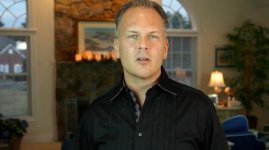
Just looking for any advice for some of the interviews I've been lighting lately. This is the raw image.

I think working on rim lighting will be my next thing, anyone recommend a light that isn't too expensive?

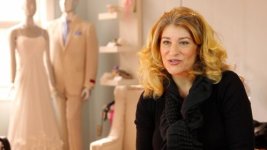
Also any advice when shooting older woman and diminishing wrinkles?

These were shot using 500LED light as key and CFL softbox for fill.
Last two pics had 1/2 CTO on them to match fluorescent room light.
I think my next light is going to be the 1000LED and use that for the key and 500LED for fill.


Attachments
  • Screen shot 2012-01-27 at 10.17.18 AM.jpg
    Screen shot 2012-01-27 at 10.17.18 AM.jpg
    15.7 KB · Views: 0
  • Screen shot 2012-01-27 at 9.11.18 AM.jpg
    Screen shot 2012-01-27 at 9.11.18 AM.jpg
    16.3 KB · Views: 0
  • Screen shot 2012-01-27 at 9.06.55 AM.jpg
    Screen shot 2012-01-27 at 9.06.55 AM.jpg
    13.9 KB · Views: 0
  • Screen shot 2012-01-27 at 9.06.22 AM.jpg
    Screen shot 2012-01-27 at 9.06.22 AM.jpg
    12.6 KB · Views: 0
Last edited:
In general you have too much fill, & not enough shape. Especially the first example. Do not fear shadows. They shape, & slim, most subjects. Most your examples are so filled that they've become cross-lit, & producing undesirable shadows.

I would have Rembrandt lit most of them from the other side of line so the shadow side faces camera. I like deeper shadows, so likely not even used fill, or if needed, just a bit.

As to wrinkles, soft light from close to camera (with fill), & if practical, diffuse the lens.
 
Last edited:
amount of fill is a stylistic choice.

1st and 3rd appear to be keyed from the far side ("rembrandt"), while the first certainly has a lot of fill.

and lots of fill is how you deal with "women of a certain age." look at your second shot. the light appears to be hitting from both sides, and from slightly below. i don't like how this looks, personally, but certain female subjects, or their handlers, frequently insist on this sort of lighting to hide lines on the face and neck. (your second shot would be... an example of how it sometimes turns out. with some practice and care, it can look better.)

your first shot actually looks better in this regard as you have a lot of even fill, and it's low enough not to cast shadows on the neck. the problem with adding a low angle fill, what i hate most about it, is that it looks "spooky," like the person is getting ready to tell a scary story.

conventionally, "women of a certain age" are lit as if it were a soap opera set. light coming from everywhere. this is very bland and why so many folks prefer more modeling, with a source further off axis (further from the camera) to show more of the shape of the face with shadows. areas of light and dark on the face, as with the rest of the frame, give us a sense of contour and depth in an otherwise 2d representation.

picturingamerica2.jpg

this gentleman is older, and i saw no reason to hide it. i liked his face and i let the near side fall off a little. there was so much natural light in the room that i didn't have to add fill, i just put the key on the same side as the windows.

catalunyaTV3.jpg

with this gentleman i controlled the light more, providing the fill and also an edge light on the near side. an edge helps to set the subject apart from the background, providing depth cues and contour. he's got a big moon face, so the fall-off is nice and soft. the shape of the face can change the way you might want to light it. most of my interviews i have to light before the subject arrives and i may not get time to adjust once they sit in. i hate that.

some folks like a hair light, pointing down onto the top of the head from behind. not my thing. if you use it, be gentle. some folks like to set a head on fire.

playing with color temperature differences between key and back, etc can also provide further depth cues and make the picture more interesting.
 
amount of fill is a stylistic choice.

1st and 3rd appear to be keyed from the far side ("rembrandt"), while the first certainly has a lot of fill.

and lots of fill is how you deal with "women of a certain age." look at your second shot. the light appears to be hitting from both sides, and from slightly below. i don't like how this looks, personally, but certain female subjects, or their handlers, frequently insist on this sort of lighting to hide lines on the face and neck. (your second shot would be... an example of how it sometimes turns out. with some practice and care, it can look better.)

your first shot actually looks better in this regard as you have a lot of even fill, and it's low enough not to cast shadows on the neck. the problem with adding a low angle fill, what i hate most about it, is that it looks "spooky," like the person is getting ready to tell a scary story.

conventionally, "women of a certain age" are lit as if it were a soap opera set. light coming from everywhere. this is very bland and why so many folks prefer more modeling, with a source further off axis (further from the camera) to show more of the shape of the face with shadows. areas of light and dark on the face, as with the rest of the frame, give us a sense of contour and depth in an otherwise 2d representation.

View attachment 46944

this gentleman is older, and i saw no reason to hide it. i liked his face and i let the near side fall off a little. there was so much natural light in the room that i didn't have to add fill, i just put the key on the same side as the windows.

View attachment 46945

with this gentleman i controlled the light more, providing the fill and also an edge light on the near side. an edge helps to set the subject apart from the background, providing depth cues and contour. he's got a big moon face, so the fall-off is nice and soft. the shape of the face can change the way you might want to light it. most of my interviews i have to light before the subject arrives and i may not get time to adjust once they sit in. i hate that.

some folks like a hair light, pointing down onto the top of the head from behind. not my thing. if you use it, be gentle. some folks like to set a head on fire.

playing with color temperature differences between key and back, etc can also provide further depth cues and make the picture more interesting.

I like the modeling in your shots, especially the second shot.

I am one of those people who prefers a hair-light, though. Especially in hD, it just puts a pretty realism to it, snapping the subject away from the background. But you're right: it can be so overdone.
 
You need a little backlight to separate your subjects from the backgrounds. I also like to light the subject a stop or so brighter than the background to increase this separation -- to me, the setting looks too bright in almost all cases. I like Fresnels for backlights; if you're using daylight balanced sources (which I prefer nowadays), the Cool Lights CDM Fresnels, available in 70W and 150W models, are really nice to work with.

You also need a little powder to help control the oily skin shine on a couple of the subjects (2nd and 3rd ones, especially).

I agree about upping the lighting ratio generally (more contrast between the key and fill sides) and getting the key light up to about a 45° angle above the subjects.

Your shots don't look bad, per se, but they're a little "utilitarian" and flat to me.

- Greg
 
Awesome. Thanks for the advice guys. MPB, great post. The examples and explanations help alot.

Up to this point I've been scrapping lighting together and have really just been lighting for better quality, lower ISO, and to match the color temperature to the enviroment. Haven't experimented with green gel for fluorescents though.

How often are you using flags and solids to control the light? I like my LED but it really doesn't offer too much control like a classic tungsten barndoors light would give. So maybe investing in a couple c-stands and flags might help?
 
absolutely, flags are a necessity on set for good lighting. even barndoors can't help you when you have light bouncing off the background and need a negative fill.
 
. Haven't experimented with green gel for fluorescents though.

That is minus green I suggested.
You would need a color temp meter to really know what corrective measures would need to be taken, if any. But from experience many flourscent lights need anywhere between 1/8 to 1/2 minus green to compensate for the green spike, with 1/4 minus green used most often.
 
Your second pic, in particular, has quite a lot of green on the talent's right side (camera left). The first one has the least.

You might want to try True Color bulbs. If they make them for your unit.
 
I honestly like your first picture a lot, but I think you should have used back ground lights on your last two, I think that is why they don't look as dynamic as your first one
 
I also quite like your first example, I'm a fan of the high key look. However I would have thrown some NDs on that window as it is so bright that it's leading my eye away from the subject. You've also got the subject facing at a comfortable angle in the first shot, whereas the second one looks rather like a mug-shot and the camera is too low, and the last two examples I think are showing too much profile (especially the last one, which is made all the worse by the fact that he has that band-aid on his neck). I don't think the lighting in the last two shots is all that bad, but the setting is awful (I'm sure it was out of your control) and your head was not level on the last shot. Combined with the over-profiled subject is gives it a slightly off-kilter feel.
Just my 2c, I applaud your vulnerability and willingness to learn by posting these up here and seeking feedback.
 
when using 5600 colour temp for interviews i light the ladies with a sheet of lee 188 cosmetic gel on
the key and fill.
i also move the lights more frontal to decrease any shadowing in wrinkles. am prepared to lose some
modeling for less shadows from blemishes.
a 150 dedo uncorrected makes an excellent backlight they are small and easy to hang and
have a reasonable punch.
 
I figure an optimal lighting for an interview would be a 45 degree key light, a hair light and make the subject even more separated by having the key light warmer than the ambient background. Thus you'll will separate the subject in three steps: key light from the side adding shape to the face than stands out, hair light to put a rim for even more separation and last by colour foreground/background to add the last piece. If you choose to add a fill light it's a matter of taste on how to model it. Good separation; sculpt the face, rim light it and separate further with colour.
 
Back
Top