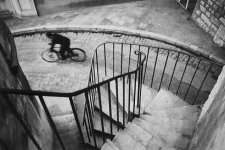
nycineaste
Well-known member
I got a great book called "the Photographic Eye", its a photography book but Ive learned so much about composition that I finally feel I understand what goes into photographic/cinemagraphic images. I'm convinced that moviemaking such a vastly multi-disciplinary topic, that most books on the subject can only gloss over the sub-subjects that make it up. Get photography books! (I also think screenwriters should read playwriting books, since most screenwriting books are "get rich quick" affairs, but hey).
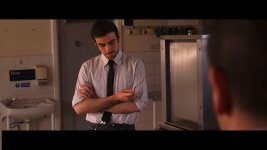
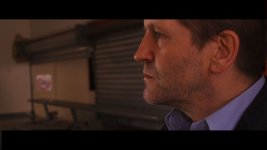
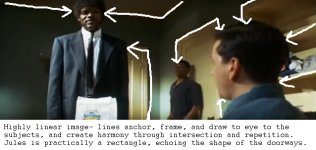
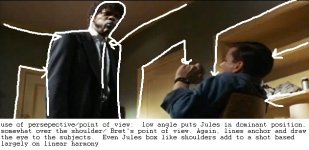
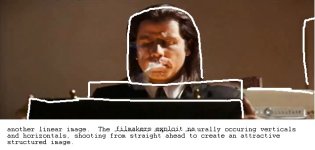
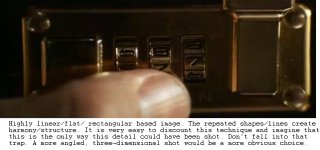
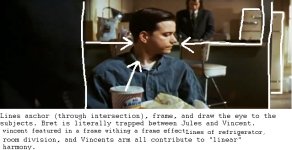
Anyways, as I usually do, I was analyzing the composition and coverage/editing of, in this case, Pulp Fiction. Here's some frames:
quick note: its very easy to discount this information as "obvious", since doorways and refrigerators and other such objects naturally occur in almost every apartment, but only a cinematographer trained in creating images with a camera will take advantage of them to create ordered, harmonious images; as obvious and basic as they seem, you'll find these techniques missing in amateur (right now, my own!) work...
(correction: in the last pic, I meant "Jules' arm")
Attachments
Last edited: