iPhone Cinematography

Hey Doug, I just want to express my gratitude for all the content you've created over the years, from your books, videos & products. They've been a wonderful resource for me. I had the pleasure of meeting you at NAB at least once.).

Thanks. I'm sure if I saw you in person I might even remember meeting you, even though NAB always goes by in a blur.

My question about the iPhone was just to find out if there was something special about it that I was overlooking. I understand it is small, portable, and very handy to have in a unexpected situatiuions. I also understand the desire to see experiment and see what can be done with a new tool. But I have not reached the point where I'm willing to give up all the advantages of a dedicated camera.
 
Many new sites and forums have emerged lately, providing comprehensive lists of strengths and weaknesses.

Here are a few aspects that particularly capture my interest as a documentary filmmaker:
1. Always Ready: My daily routine involves charging my phone every night, ensuring it's readily available for up to 12 hours of active use each day.
2. Ease of Use: The iPhone's swift startup allows me to begin shooting within seconds if the need arises.
3. Portability: The iPhone, along with a 4 Terabyte SSD, can fit in my front pocket.
4. Compact Backpack Setup: Inside my backpack, I'll maintain a minimalist setup, including a small cage (the phone securely attaches via a magnet), a compact battery, an XLR converter with 48v support, a wireless microphone, and a lightweight tripod.
5. Transportation: There's a bus stop in front of my house, and being over 65 grants me the privilege of free public transportation throughout Montreal, eliminating parking hassles. I can even film within the Metro system.
6. Content Creation Freedom: With this setup, I can shoot content virtually anywhere, free from unnecessary complications.
7. Enhanced Interviews: Interviewees tend to feel more comfortable and open up easily with this setup. I position the phone on a small tripod beside me, maintaining uninterrupted eye contact with the subject. Occasionally, I verify framing by glancing at the image on my Apple Watch.
8. Efficient Data Management: No need for card downloading at the end of the day; I simply back up to a second hard drive.
9. Cost: I plan to update the iPhone every year if there's a major change.

That us a GREAT answer. I can't say I agree with your approach to video, but you have made your case very well.
 
How ridiculous. There is no cinematography without a camera. I don't understand the point of your post.


It is about definitions. Writing is not about pencils and paper or laptops. And a camera is just a tool. Cinematography is the sum of a lot more than camera's. And yes you need a camera to be a cinematographer. But, using an Iphone 15 (or any other camera) doesn't make the user a cinematographer.

Edit: For me is cinematography 'the art and craft of making motion pictures by capturing a story visually.'
Though, another definition: technically, cinematography is the art and the science of recording light either electronically onto an image sensor or chemically onto film.

In my book cinematography is about storytelling, with light, sound, music, etc.
 
Last edited:
I don't aim to evangelize; I'm just enjoying the ride.
I'm currently following a Blackmagic forum, and it seems they are taking this seriously. Apple, possibly, as well. Or perhaps they're trying to capture the interest of the youngins.
Some third-party parts markets are also showing interest. I believe we may witness several innovations within this year. As I uncover new insights, I share the relevant links on my website.
 
Last edited:
But, using an Iphone 15 (or any other camera) doesn't make the user a cinematographer.

And neither does using an Alexa or Venice. So what?
I still don't understand what they point of your post is. If someone wants to shoot video with iPhone, why does that bother you?
 
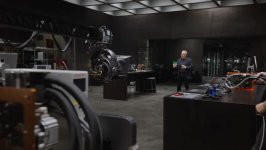
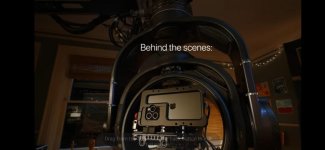
Having spent much of my career collaborating with ad agencies, I completely understand it. It's brilliant marketing and also underscores Apple's commitment to the format.
 
Having spent much of my career collaborating with ad agencies, I completely understand it. It's brilliant marketing and also underscores Apple's commitment to the format.

Oh for sure, it makes perfect sense. It just feels funny, especially considering the list of reasons you gave for using the format and how none of them apply in this instance.

But as has been said many times before, the rigging and lighting are ultimately way more important than the camera for a shoot like this.
 
Oh for sure, it makes perfect sense. It just feels funny, especially considering the list of reasons you gave for using the format and how none of them apply in this instance.

But as has been said many times before, the rigging and lighting are ultimately way more important than the camera for a shoot like this.

If it wasn't an actual ad for the manufacturer, it might be a bit more questionable. They are trying to make a point and using the right tool for the job. Besides, while Technocranes may seem exotic if you don't get to work with them, they have become ubiquitous at a certain level of production to the point where they are hardly a specialty tool any more (in a similar way that gimbals have become in smaller productions). It did seem weird to me 12 or 13 years ago when we slung 5DMKII's onto Technocranes also, but it's pretty much the same idea!
 
It is about definitions. Writing is not about pencils and paper or laptops. And a camera is just a tool.

You cherrypicked an example that supports your point but there are many others. Anyone can press a given character on a keyboard and have it deliver exactly the same letter. But no two fine arts painters will weild their brush the same way. Would you suggest to a concert violinist that their Stradivarius just a tool?

For me is cinematography 'the art and craft of making motion pictures by capturing a story visually.'
Though, another definition: technically, cinematography is the art and the science of recording light either electronically onto an image sensor or chemically onto film.

In your definition you acknowledge that cinematography is about the capture/recording of the image. This hardly makes the camera a "tiny part" of the process.

No-one here has said that shooting on a phone (or any camera) will transform a novice into a cinematographer of note.
 
You cherrypicked an example that supports your point but there are many others. Anyone can press a given character on a keyboard and have it deliver exactly the same letter. But no two fine arts painters will weild their brush the same way. Would you suggest to a concert violinist that their Stradivarius just a tool?

In your definition you acknowledge that cinematography is about the capture/recording of the image. This hardly makes the camera a "tiny part" of the process.

No-one here has said that shooting on a phone (or any camera) will transform a novice into a cinematographer of note.

Ha Ha Yes, good tools need the right hands. When I play the stradivarius (or any cheaper violin) no one will like it.

My point is about the definition of 'cinematography'. I found these two definitions:
  • 'the art and craft of making motion pictures by capturing a story visually.'
  • 'cinematography is the art and the science of recording light either electronically onto an image sensor or chemically onto film.
In my book cinematography is about the first one, storytelling, with light, sound, music, etc.

Thats all. No offence against any people or camerabrand. Correct me when I use the wrong definition.

Cheers!
 
Last edited:
My point is about the definition of 'cinematography'. I found these two definitions:
  • 'the art and craft of making motion pictures by capturing a story visually.'
  • 'cinematography is the art and the science of recording light either electronically onto an image sensor or chemically onto film.
In my book cinematography is about the first one, storytelling, with light, sound, music, etc.

Sound and music are not part of the definition of cinematography. They are of course very important parts of filmmaking.

Let's not get too bogged down in what defines what. I think we all pretty much understand these things. And we surely all agree, it's not the camera that makes the magic, it's the person using it. iPhones are (now) capable of making very good looking images. This thread (I believe) is about new ways to harness and configure those devices to satisfy a given workflow, not whether or not a given person becomes a cinematographer just by shooting on an iPhone.
 
Sound and music are not part of the definition of cinematography. They are of course very important parts of filmmaking.

Let's not get too bogged down in what defines what. I think we all pretty much understand these things. And we surely all agree, it's not the camera that makes the magic, it's the person using it. iPhones are (now) capable of making very good looking images. This thread (I believe) is about new ways to harness and configure those devices to satisfy a given workflow, not whether or not a given person becomes a cinematographer just by shooting on an iPhone.

Well said.
Personally, I'm certainly not going to be shooting serious video with an iPhone, but if someone wants to do it, more power to them. Any camera can be used for "cinematography" when used correctly. Just as even the most expensive and complicated camera ian be used to shoot home movie quality video.

Publimix, have you seen The Whale? Neither have I. But I saw just enough of it on HBO to know it looks like complete garbage. Yet it was shot in full-frame 6K on the Sony Venice, with Angénieux Optimo Prime lenses by an ASC cinematographer. Worst looking film I've seen in decades. Unwatchable. The people involved should be embarrassed. I'd rather watch something that looks good and was shot on a iPhone.
 
Well said.
Any camera can be used for "cinematography" when used correctly. Just as even the most expensive and complicated camera ian be used to shoot home movie quality video.

Well said Doug, I translate that as: 'Cinematography isn't about camera's, that is just a tiny part.'
 
Well said Doug, I translate that as: 'Cinematography isn't about camera's, that is just a tiny part.'

Try doing cinematography without a camera. How far you gonna get?

I translate your comments as: "Driving isn't about cars, that is just a tiny part." or "Archery isn't about bows and arrows, that is just a tiny part."
I think you are just trolling us now. I won't waste further time on this.
 
I can never trust a phone even if it records 10 bit video,
​​​​of course this is a personal feeling...
 
How come though? Because when critically-thinking about it...many of us make videos for people to enjoy or promote/sell something.

So if a video is highly-liked and receives millions of views and comments and engagement - even if it was shot on a Hello Kitty toy camera - that's the end-goal, right?

[Unless you're saying you don't trust that the phone is really 10-bit or worried about the phone's camera failing to record or something which is unlikely and rare.]
 
Back
Top