Cost to film a feature ? (what did u spend?)

Are you talking to me? Sorry wasn't sure. If so thanks! :)

Also I forgot to mention what we'll probably have to spend to finish the film...I need to buy a few things to finish post production. A decent pair of production speakers for one. Who knows what kind of fees it will take to get the film legally tied off either with music licensing and things of that sorts, lawyers fees, we're going all the way with this one. Who knows where it'll end up...since right now I don't have anyone to fund it but me mostly, I'm not looking forward to it lol.
 
Do you get that bond expense back upon completion, or is that sort of like an insurance premium you pay as an expense, not refunded upon completion?

What does a payroll service cost typically for a film like you did?

... With a SAG contract you are required a bond (costing us over 5g's to make sure we pay all SAG actors), a payroll service,...
 
Do you get that bond expense back upon completion, or is that sort of like an insurance premium you pay as an expense, not refunded upon completion?

What does a payroll service cost typically for a film like you did?


Once all requirements were met and SAG viewed the paperwork and was satisfied, we did get the bond back (about 2 months after filming was completed) with interest.

Here are the payroll fees:

"Tax Burden fee- 19.56% [SUTA, Federal Taxes and Workers Compensation]
Pension and health- 14.8% of gross wages
Admin fee is 4% of the subtotal or a $250.00 project minimum fee, whichever is higher."

I also had to add the payroll company as an 'additionally insured' to my policy. There are also strict rules as when the forms have to be sent to the payroll company. Make sure you have someone doing the forms correctly. On our first shooting day, our 1st AD put down our in times incorrectly (since we were on set as 'Crew' first) and we ended up having to pay ourselves OT plus meal penalties.... Go figure.

Todd
 
Thank you , good info to know. I absolutely hate forms and bookkeeping, ugh, I would have to find someone to do all that for me.


We had our 1st AD do the paperwork when he was on set (we only had him for a few shoots, the rest my film partner took care off). It's good to have someone who's on top of it (making sure all Exhibit G's are filled in properly, and all IRS forms are signed, etc.). In the end, it is worth the headaches...

Also make sure that you do give breaks when required as well as trying to finish within the 8 hour time frame (or you will have to pay OT).

Todd
 
51CR1HZ6FWL._SS500_.jpg


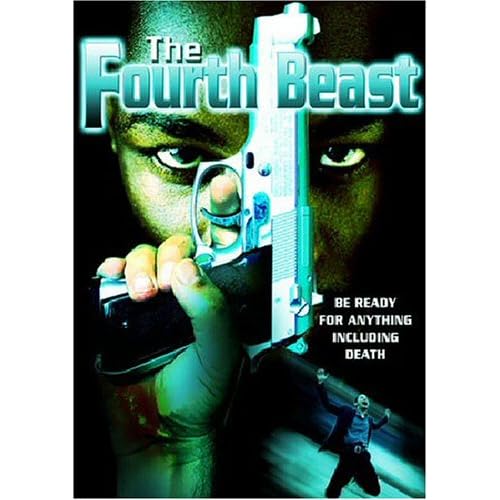
I actually wrote a book about micro-budget filmmaking. This one cost me a little over $800 to make. It was distributed by in 2003 by a distributor that will go nameless. This was an action film and the budget was actually $500. The actors came from Columbia College here in Chicago and everything aside from the music was done by me. This film sucked. For a first feature it did well. It got distributed, picked up some fans. Was sold through Netflix and Blockbuster. I had my own equipment so there was no cost there. I knew three professional actors (actors actually doing this seriously) and I go them in it. They all worked for the fun of it and the credit. We bought lunch for everyone every shoot day. I didn't do this cover by the way.

makaylasm.jpeg


I did this one for roughly $5000 minus advertising. I got all my actors from Craigslist. I paid the leads and the rest were actors I knew or volunteers. This film had some heat on it two of the actors drove all night and morning to get to the shoot. I bought everyone one breakfast for the day. We rented several locations and used our contacts at the College to make use of their some of their props furniture and weapons (they have a stage combat department). We had many props and things from our last film so we reused a lot, other stuff we sold or tossed away because it was broken. I also got two great martial artist to do scenes with me. They're in all the best fights scenes. I had more money and therefore more control. We had lighting and locations we weren't rushed out of. This cover is mine.

I was the lead so I didn't have to pay myself nor worry about not showing up. LOL. When I was in front of the camera I got film students to shoot under my direction. Other times I was behind the camera. We could've gotten some rogue (and well known) SAG actors but decided against it. I learn a lot more in this shoot and find shooting features is very easy once everyone is on the same page. I also plan for no shows and plus many of my actors also knew how do camera work so that didn't hurt.

As far as what is "reasonable". I don't know. For $50,000 I could make a heck of a film. The standard is $250,000 (your average low budget B film) because even B talent cost money. I know several celebs one whose on TV now and has a nice fan base. I bet that day rate has gone up quite a bit.

-Nate
 
Last edited:
As far as what is "reasonable". I don't know. For $50,000 I could make a heck of a film.

-Nate

Hey Nate,

What's kinda funny is that once you get the money, people are less likely to volunteer or lend you their equipment for free. Trust me, the film you made for $5000 would go up dramatically in budget if you had to pay SAG fees, Bonds, Insurance, Locations, Hotels, Meals (fast food doesn't count unfortunately), Meal Penalties, Travel... Take all the favors out of the equation and your suddenly stuck with a $50,000 bill. It doesn't mean people won't help you out (there are always those who stick by you know matter how much money you have to spend), but just remember not every project will have people willing to work as a favor or for credit (especially if you become 'established'.)

There are those who cut us a big break on our film because they loved the script, but we still had to pay something (especially these people are used to working on mainstream films with day rates up to $1500 per day). We had a joke that our lead actress just came back from a shooting a film in Texas that had 75 crew members and her own trailer to our film with 4 crew people and a basement to hang out in. When we picked her up from the city and brought her on set we said, "Welcome back to the Indie world." Fortunately, she liked the script, didn't mind the conditions and worked with the SAG $100 per day rate.

Another great story is we had one last shot to pick up for a montage and we were shooting in NYC at a very famous location (a favor). We were shooting in the mid-afternoon because the light always shines on the location I chose; we couldn't afford our DP and lighting equipment since it was a MOS shot that would only last for 4 seconds on screen). Well, it rained that day and the other actor in the shot showed up (he had just been wrapped on a feature where he co-starred with Robert De Niro) with us trying to figure out what we would do to salvage the shot. We ended up using a practical lamp (just off camera) and shined it right into our eyes so the shot wasn't completely dark (and I had the gain up as high as I could; what a mess). We made the same joke... "Welcome back to the Indie world." Needless to say people make exceptions when working on Indie films.

My original budget for my film was $8000.00 and we could have made it for that if we had stuck with our initial plan. Once I threw in a SAG contract with payroll and bond (kinda had to since myself and my film partner are the main actors and we're both union; plus this opened the door for signing other SAG actors), paid for a crew including equipment rental (I bought all of the equipment except for the lighting), hotels and travel (no one sleeps on the floor- it's in their contracts), strict shooting deadlines with penalties meaning not going over 8 hours for cast or 12 hours for crew, setting up a legitimate film company (including trademarks), well... you can see how the bill jumps up.

I always wondered myself where all the money goes on a Hollywood film (of course we didn't shoot a $20,000,000 film) but I can see how it can go fast. For example, shooting permits in my home town are non-negotiable at $750 per day with extremely strict guide lines (including paying a police officer to be on set). Obviously we got permits when we could, but a 20 day shooting schedule at $750 per day...?

Remember, opening credits on a typical Hollywood film will cost more than the total cost of most independent films...

Anyway, sorry for the long ramble and I wish anyone success when it comes to making their dreams come true (money or no money). :)

Todd
 
Good post and good info Todd. I like the DWC trailer too. First off no one needs to know your budget, they just need to know they're getting paid now (not differed) and this makes all the difference. (I know you were working with SAG so it's different). I think at $50,000 a lot of people want to hurry up and grab a SAG actor. I say read the SAG contracts carefully. The ultra low budget contract is the one you want to use. But you're right about what you're saying, but watch the "non-SAG" breakdown. (I already have this figured out for features I'm planning now I just need the $50,000 lol).

$1000 for a new intell 2.5 iMac via eBay
$3500 for Camera
$1000 Camera B.
$300 for lighting plus my producer has lights.
$250 FCP Upgrade (I know teachers)
$150 tripod
$200 New Boom mic
$300 Crane
$350 Dolly (If we don't make one)
$1000 props and costumes (probably less because I have a lot of stuff already)
$2000 Extras
$3000 travel
$4000 food
$2000 locations
______________
$19,050 Estimated: $20,000. You have $20,000 left. ($20,000 because remember you're saving $10,000 for post). You should be able to pay everyone with $10,000. You'll have $10,000 for your big actor depending on who they are and how many days you use them this should be more than enough. This is all if everything goes well. I could make it out for less but this is the basic breakdown for a $50,000 budget. The beauty is if I were doing a $100,000 film I'd keep the cost the same and get a bigger SAG actor.

Also the travel, locations and food budget are really inflated. I put food at about $100 a day (but have never had to pay that much). And travel about $100 paying a driver to come and go when needed. I could take $5000 and buy a car but for now lets just say we didn't. Don't forget your extras, they get about $25 and free food. Shoot on a crowded day or night Downtown (think Chicago Avenue) and you'll only need a few extras if any. I would pay extras if specifically neeeded, but if I have $50,000 most if not all would get paid.

And I wouldn't go for big SAG actors, you go for SAG CORE actors (people forget about them). Get one (or two if you can afford it) who're well known. Fly them in and pay them their day rate. The rest of the money is for production (save about $10,000 for post). I have a two musicians at who I can get to do things not to mention hoards of musicians who just want their music to be in your film. One of the musicians is professional and can score the film.

Keep in mind though, I already have FCP, AE, and all the needed programs so I'm good on that end. I'm in Chicago so I don't need a permit to shoot except for if I'm blocking public streets or using weapons in the open. I would pay my actors about $70 - $100 a day and the fighters get $50. Key fighters would get $100 or maybe $150. Camera people, lighting guys and boomers can all be gotten from Craigslist and Mandy. I have a 6mp camera we use to take set photos so let your script supervisor do it. PAs get about $25 - $50 a day and normally double as gaffers and such. $50 will get you a film student for a few hours to do your shoots for the poster. You will need to bring everything including your laptop so they can dump the footage. They just bring the camera and themselves.

In Chicago locations are cheap because people are cool. The school will probably allow me to shoot there for free as they always have. You can hire a location scout or simply call the place yourself, I do. Pay half up front. Most people will hook you about for about $100 - $200 and a location manager credit. The hard part is getting professional locations (offices and such) but sometimes you luck out. Other times you simply have to make a class room look like an office. LOL. Columbia has a dance studio that looks like a dojo. We write "Stances" on the board and draw people doing martial arts, (also you may want to hang a martial arts flag) and no one knows the difference unless they go there.

In post record the cleanest sound possible then let the sound guy take it from there. Give him your music and score (my sound guys do all this). He'll handle it. I'd do my own color correction unless I need to bring someone in and our post fee should cover this as well for those scenes. You will be depending on students to do small work and getting paid is an added advantage to most. No matter how much you have you still look at it from the view of a guerilla filmmaker. As for opening credits: LiveType and After Effects. My budget on "Wages of Sin" was $4000 we ended up doing about $4500. Not too bad for what we got.

-Nate
 
Last edited:
Having been part of this forum for quite a while i noticed that most people here are inspiring Rodriguezes rather then (if any) Godards. As such we are talking about efficient filmmaking very much so like in the TV world. Also i don't know how many of you do this for a living (i do) but at some point one starts noticing a patterns that with each production allow to save some money and time here and there but also makes you realize that sometimes not spending the extra $100 now will force you to pay $300 later on. Having shot (mostly as DP but sometimes directing too) over 70 productions (including 2 feature-length films with over 500k budgets) i can tell you that there is a formula of some kind. Normally you take the budget and try to squeeze the production into the budget (hello, indie world!), that will dictate the crew size, the gear but also what's possible and what will stay in the real of fantasy.

So not to make this post longer then necessary. Let's say you come to see me with 60k in the bank and a small indie script:

DIRECTOR (you) $0
LINE PRODUCER $200/day

DP $550/day
AC1 $200/day
CAM. INTERN $100/day

GAFFER $200/day
G&E1 $200/day
LIGHT INTERN $100/day

SOUND (+gear) $200-250/day

MAKE-UP (+ kit) $200/day

PA1 $100/day
PA2 $100/day

You try to cut any of the above and you will suffer %95 of the time. Depending on the script you might also add:
SCRIPT SUPPER $150-200/day
ASSISTANT DIRECTOR $200/day
ART/PROPS $200/day (so that they scavenge the location for small items that make the scene even cooler)

Then add:
LIGHTS $3000-4000 for shoot (plus truck)
CAMERA $5000 for shoot
FOOD $200/day
INSURANCE $1200 for shoot
PERMITS (free in NYC area)

Is it the kind of production (most are) that will benefit from another B camera? If so add:
CAMERA B $5000 for the shoot
CAM B OP $200/day
AC1 $200/day
(so you discover that with clever coverage for extra $10,000 you get yourself 2x as much footage!)

Then ask yourself a question:
-- are the locations for free (if not add $500-1000/day)
-- do you have to get 15 pass van to transport the crew to the location (if yes, $150/day)

Then comes the post. Most people here are ruining their films by editing those films themselves. YOU ARE NOT AN EDITOR! I too know FCP (actually quite well) but that doesn't make me an editor, it only makes me a button pusher.

EDITOR $1000/week (about 6-8 weeks)
COLOR CORRECTION $500/day (about 2 days)
SOUND MIX (no clue here)
MUSIC (usually free because there is so many musicians out there)
ADR (hopefully you don't need it, but if you do your soundman will hook you us -- because you didn't decide to get a student with no connections to record your sound for free)

So you discover that with your crew expenses at $3000/day your $60k budget takes you only so far. But at least after 12 crazy days of shooting (you couldn't afford to shoot for longer) you have a film in your can that has at least a tiny possibility of going somewhere.
 
Last edited:
One thing to keep in mind though is a lot of people here do it all themselves and only hire those who do what they can't. I do hire camera people but not DPs because I normally have a story board or have the scene in my head and keep going over it and over it. And camera op is cheaper than a DP. I do my own editing and after the last film I have another editor but he's a longtime friend. I usually give him things for his services. Last time I gave him the harddrive we were using for his services.

But yes the difference between an indy shoot and a Hollywood shoot (even a big Hwood indy shoot like you're pointing out) is staggering pricewise. Some of the things you named I'd never use. And paying a PA $100 for a $50,000 shoot? Now if I were doing a big shoot (think the $250,000 shoot) sure, but $100 is a lot of money on a low budget and suppose you have to rent a car for a scene? That's your rental fee. And paying a person to scavenge the location for small items that make the scene even cooler is something I can do. Go to the local Salvation Army and pick up all that stuff. (But it's good you bought up art direction, a lot of people don't know how important that is). But I can fully see where you're coming from. $50,000 wouldn't last a second under those conditions. And 12 days is about the length of an average low budget shoot.

-Nate
 
Or you can get your friends to PA for free and you will save yourself $1200, but in reality i don't know about you but i don't have friends who can donate their time for 12 days straight (i can though get a full crew to work for me for free for 1-2 days if it's a personal project of mine), thus you hire some people. Then you just try to figure out what's fair to pay for 12-14 hours (after all they are PAs) per day. I say anything less then $100 isn't fair but ultimately it's between you and the person.
 
Good post and good info Todd. I like the DWC trailer too. First off no one needs to know your budget, they just need to know they're getting paid now (not differed) and this makes all the difference. (I know you were working with SAG so it's different). I think at $50,000 a lot of people want to hurry up and grab a SAG actor. I say read the SAG contracts carefully. The ultra low budget contract is the one you want to use. But you're right about what you're saying, but watch the "non-SAG" breakdown. (I already have this figured out for features I'm planning now I just need the $50,000 lol).

-Nate

Good strategy. We're pretty much going about it the same way. Virtually all of the SAG actors (including myself) are unknowns. Some of them are starting to get noticed and I have a feeling will do quite well for themselves.

A far as post: I did all of my own post (and I mean, everything; I couldn't count the hours in front of FCP or Logic) so the only post-production money I needed was for some extra hard drives and money to record drum tracks at a nearby recording studio. About the budget, yeah, we had to be upfront with the costs since we had to report everything with SAG.

When we hired the crew, our budget at the time was $15,000 and everyone was cool with their rates (even when the production went up; the better the film ends up being the better it looks for the crew). BTW, the rates listed below are very close to what we had paid out. The only difference is we had shot for a lot of days (another reason our costs were higher).

I think the great thing about indie filmmakers is that most of us end up doing everything ourselves. From writing, directing, acting, producing, editing, cooking, driving, changing the toilet paper, etc. If someone asks me "So, you're one of those guys who thinks they can do everything themselves, huh?" My response is that "No. we didn't do everything ourselves because we could. We did it because we had to."

This is a great thread, keep contributing!

Todd
 
Patryk, nice information, thank you so much for sharing, I am soaking up all the posts including yours on budgeting, costs, who to hire for how much to do what.
~Randall
 
I made my last feature film for nothing. I don't use budget forms anymore. I go out and shoot with my Z1 camera (a present). Usually my actors call me and invite me to some events. They know I love to shoot cinema verite style. I edit on FCP 5.04 (also a present :-) I release on DVD.

Felliniesque Players is really the best film I've made so far -- no pressure, just creativity.

But to be of more help here, if you're making your first feature film, I'd say use a standard budget form and fill it all out. The most important items are the PR and marketing costs. You should budget very high in these categories because it's really more expensive to market movies now -- more than ever before. So if your budget is $500,000 -- budget $500,000 for PR and marketing.

I've been following the Corrado and ALPFD threads mainly from the perspective of budgeting and final outcome of sales. Neither production allowed anything for marketing and PR -- at least not an amount equal to their budgets. Corrado used the name-actors concept more than ALPFD. But otherwise they were both action genre movies. The production values are very similar. The cameras used were the same. For me these two productions with so much detail available on them are very instructive to indie filmmakers. It's really very generous of these movie makers to post all that info here.

The other movie threads that are also interesting are the no-budget to ultra low budget movies. I think that there should be a minimum of at least $30,000 allocated for PR and marketing for each feature film or movie. This way no matter what happens you can sell your movie and recover your money at some market.

Without PR and marketing funds, no matter how good or commercial your movie is, the chances of getting the movie distributed are almost nill.

There is one exception on this website of a movie that was made for a decent budget, which apparently made its money back or at least is going to make its money back. It's the religious movie that Brandon wrote about. But I couldn't find out what the distributor actually paid up front in relation to the budget, so I'm not following that thread for now.

My best advice is line up the distribution before you begin production, and then align your budget to the expected up front payment when you deliver the movie.
 
We're finding out that good PR campaigns can range between $3,000 to $5,000 per month depending on the firm. You can always hope for a big festival to accept you and that will kick start free PR (though you will definitely have to boost it up yourself).

Of course we are hoping for just that. A big festival. I do have plans on the back burner just in case this doesn't pan out (and you should never rely on the big boys).

Todd

btw, I do have the budget form (Excel) I used for my SAG reports that I will try to post here for download.
 
Is recouping production costs (budget) pretty much the goal of indie features, viz do indie features rarely make more than production costs? I am not complaining mind you, just trying to understand it all. If an indie could even recoup the prodco costs it still means a filmmaker could have fun with the process of seeing a story come to fruition, for the world to see, and heck maybe the dir/producer might even get noticed and funded for bigger and better flicks, and hopefully (?) get money in a budget to pay a salary for the director/writer/producer so as to make a living while making featre films?
 
We did about a month worth of tv ads. I think youtube may have been better. Self distribution is the best route for a small film if you have the money and time.

-Nate
 
I do know about presales and all but it's getting the $10,000 to get into the AFM and get a booth or "office". Not to mention the housing for the week. But I would like to see the thread because I may be heading off to the AFM next year if I can get the money.

-Nate
 
Back
Top