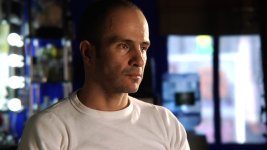
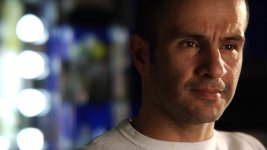
Sorry for the long post, but thought my experience might help someone.
I bought the Letus Extreme for one purpose - to achieve shallow depth of field while shooting interviews. Prior to purchase I tried to do my homework by reading this forum and a couple of others. Felt like I knew most of the issues and considerations.
Being a plug & play type guy (I want to use equipment, not fritz with it), I took the plunge by buying a Cine Kit (Letus, rails, camera platform, etc.) from Zacuto. Yes, it is pricey, but it’s also extremely well made and offers versatility for use with other cameras and just about any 35mm lens.
First results of studio testing using a Canon XHA1, the Letus and an old Nikkor 105mm F2.8 were soft. I tested the Nikkor lens with a still camera (newspaper classifieds taped to a wall) and it turned out that this lens was surprisingly soft at F2.8. During a 25 year career in still photography, I’ve tested a number of lenses and have an idea of what to expect. So…
I bit another bullet and purchased a Nikkor 85mm F1.4 from KEH. Quite a piece of glass! I immediately tested this lens with the still camera. You could see some sharpness fall off going from F2.8 to F2.0 to F1.4. A little disappointing but not surprising at these wide apertures.
As time allowed the last two weeks, I’ve tested and tweaked the Letus using the 85mm lens, determining sweet spots for the Nikkor lens aperture (F2.8, F2.0), sweet spots on the Canon both for focusing the Letus’ ground glass (per information I learned on this forum) and aperture selection (F2.8), all while using a JVC DT-V24L1U 24” Broadcast LCD monitor for viewing results after importing into Final Cut Pro.
Lastly I shot essentially the same footage using the same Canon camera but without the Letus - on a different day with slightly different lighting - but close enough to call it apples to apples. And that’s when my opinion of the Letus started to go south.
I immediately noticed when shooting without the Letus, how much sharper my subject’s eyes appeared on the Canon’s LCD, and how much easier it was to focus on them. When compared on the JVC monitor, the clips shot without the Letus were undeniably sharper than those shot with.
Now I admit to being a perfectionist when it comes to image sharpness. In the professional photographic realms I’ve explored over the last quarter of a century, if you don’t have a sharp photograph, then you don’t have a photograph. No doubt many, if not most people, when shooting 35mm adaptor footage in real world situations, would probably not notice the sharpness difference that bothered me.
But when it comes to video interviews – essentially a portrait session with audio – sharp rendition of the speaker is critical. The face, and especially the eyes have to be dead on. No room for error or compromise. If there’s a desire for subject softness, then it should be controlled with filters, not dictated by equipment limitations.
I’ve tried to be meticulous with these tests, but I may be overlooking something. Or perhaps my expectations were too high. Common sense suggests that there may be some price to pay by putting all that stuff (including a vibrating ground glass) in front of the XHA1’s excellent lens.
I’m disappointed; I wanted the Letus to work. I emailed Hein at Letus prior to posting this and he replied, saying he thought the EX1 Optimization Kit might help and offered to send one, with my returning the original achromat for credit. I declined, feeling that I’ve spent enough time with experimentation.
I welcome any further insight or suggestions.