Was it me or the sound guy? - Distorted audio

It is probably in the signal you got. In these kinds of events there is always a ton of other noise going on and the speakers themselves may be masking the distortion. It is also very hard to really hear your signal. About the only way to really monitor would be with those super isolating headphones built in to ear protectors. All the bleed will tend to mask the distortion. And if it's coming from the board that way then the room is also getting distortion so there is not a lot you can do.


From your perspective I would have recorded a "room" version also because if it's for the parents they would probably love to have some of the audience sound reaction also and that would help mask the music. You can probably slap the de-clipper from iZotope's Rx on this and make that top end grit go away.

I tried the Izotope, didn't really help much at all. - I also had a shotgun mic on - going to end up using all of that sound for the vocal & runways which is a shame.
 
In my experience often when you sound check the level is a lot lower than when the event starts.

Been there, done that, got the T-shirt both as a musician and FOH mixer. If they're lucky the band gets a sound check. But when they hit the stage with a venue full of people and the adrenaline (and whatever else :Drogar-Smoke(DBG): ) is flowing the drummer hits harder and everyone else ups the volume a couple of notches. For years I brought a cassette or a DAT recorder to capture performances for later critique and learned to reduce sound check volume by at least 25%.
 
If you do a lot of louder events, invest in a pair of proper IEM headphones. No need to spend a fortune on custom moulds, but something like Shure SE215s with the foam ear pad offer tons of reduction of room audio and decent headphone quality. I use these frequently for all sorts of things and they are worth the outlay because you can really hear what is going into the camera.
 
Proper IEMs are great, and in high-noise conditions, they have the advantage that you can wear a pair of hearing-protectors over them to significantly increase the exclusion of environmental sounds.
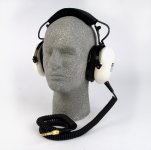
David Clark is one of the best known makers of these things, as used by people who work on the deck of aircraft-carriers while aircraft are taking off and landing.
Also, there are special combinations such as the transducer elements from the industry-standard Sony MDF-7506 installed inside DavidClark hearing protector shells...

http://www.trewaudio.com/store/Remote-Audio-HN-7506-High-Noise-Headset-HN7506.html

d-255-1603.jpg
 
Hey all, just looking at some footage I wrapped up at a local event, I had the sound guy run me a line into my C100 from the board, and everything seemed good during testing, but now listening to it, it seems a bit distorted at the max volume.
My levels on the camera were never at 0 - mostly around -12 and on my NLE it shows as well.
Did he have my input too high and I just couldn't tell because the music was so loud in the venue?
They were pretty experienced sound guys , and it was the first time I've run a line to my C100.
I'm pretty sure I had it set to line as well.
I'm new to patching into their board, I thought that if the levels on my camera were good that the audio would be good? What would cause the distortion? I've attached a clip

Sorry about your troubles. I can really sympathize as I recorded something similar recently where dialog was within limits and some loud music in the BG caused clipping. When you see that "flat top" on your waveform it's so depressing... BTW Adobe Audition has a pretty neat clipping repair function that works pretty well with audio that is not severely clipped (like yours) -- you may want to give it a try...
 
Back
Top