tips for taping improvised live music

mpalmer12345

Well-known member
I've been taping a friend's free jazz concerts for a year or so now just for practice, and I'm getting kind of bored with the tools at my disposal. I was wondering if any of you can suggest creative ways of shooting an improvised live music concert with a single camera. As it is now, I set my HVX on a tripod and do various slow zooms and pans to briefly focus on individual musicians, and this works okay in most cases, but I'd like to add a few more tricks to my toolbelt for variety's sake.

Things to keep in mind:

Handheld, I find, distracts from the musicians too much, and I can't really sustain it for a full hour. That's my main reason for preferring a tripod, although, a tripod obviously has it's own problem of feeling stiff and stodgy, especially when the music gets wild.

The music is totally improvised, so there's no way for me to plan in advance where the main action is going to be. Basically, I am always having to guess in relation to my best sense of where the music is going, and naturally I am not always correct. Is there a way to minimize such errors?
 
Trying to record live concerts that are interesting with one camera is really tough. I'm preparing to do a fashion show right now, and I'm using three cameras, an HPX, and HVX, and a llittle Sony A1U. I use the A1U on a tripod or boom for my "fixed" reference shot, though we will zoom a few shots or if it's on a boom we'll move it across the stage for interest. I try to get sound off the soundboard and mix it into the Sony's low impedence inputs. Trying to mic is crazy because of all the audience noise.

The other two are handheld and then cut with the A1U footage (I convert the HDV footage with Raylight to 24p). The hardest part with a concert is matching the timecode from 3 cameras. The A1U can't output TC so we use a clapper at the start and keep them all running as long as we can. I'm not an event videographer, but it works for the occassional project (usually something donated).

In your case since you are working with one camera so something I've done before is to take the good camera and set it on the tripod to become your reference shot, and then taken a cheapo video cam and used it handheld, trying to balance it or rest it on something to get the best shots I can. I then take the footage and convert to B&W (sometimes even using the "NightShot" setting for interesting results). You might even be able to find a nice older Sony Video camera that has widescreen settings (my brother has one that takes a great picture so I know they exist). I've seen decent SD MiniDV cams for $50 on eBay that would work. For recording audio, I'd get an inexpensive mini CD or hard drive recorder and try to get a feed off the sound mixing board (if they use one).

Then during the concert, I'd periodically move the "reference" camera so it's not always taking the same shot. When I did that, I'd reload, change batteries,or reset each camera as necessary and use a cheap clapper to identify the actual time and try to set each camera to zero TC each time and hit start. Also, when I moved the camera on the tripod, I wouldn't always just frame the whole group, try for some interesting "across the stage" shots and then balance that shot with your handheld shooting from the other side. It is a cheap and effective way to vary the interest in your finished product.

Another trick when shooting handheld is to sit off to the side, preferably behind or beside the dummer and look out to the other musicians. Then you can frame them with the drumkit or looking up at them. I put the camera in my lap to steady and then zoom and focus a variety of shots. BTW, a good way to get steady hand held shots is to lean against a pole or column if you can find one. Makes all the difference in the world. You might want to consider a monopod if you get a small cheap camera. I've seen decent monopods at the local camera store for under $50.

To reverse the situation, put the cheap camera on a tripod as your establishing shot and then use your good camera to move around and get quick clips as mentioned from different angles. I just did that for a show and it looked like I had several cameramen working, even though it was just me. However,I blew the audio because I used microphones that had audio set to auto levels. Big mistake, the instruments sounded fine but the vocals clipped horribly. Always use your manual audio control on a camera or recorder and set it a little lower than you think. Sound men have a tendency to turn it up as the show goes on. I'm personally convinced most of them are deaf anyway.

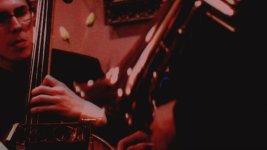
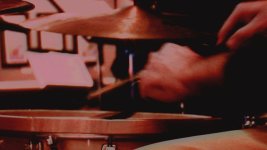
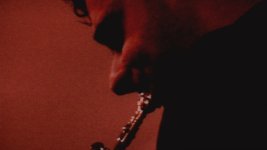
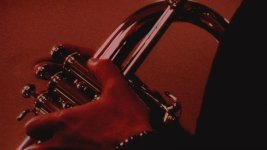
I've posted a few grabs from a friends jazz group while they were playing in a cramped coffe house. Not exactly a concert venue. I just used one camera and held it in my lap, zooming as necessary to add some variety to some tripod shots I'd already taken.

Anyway, don't know if any of this helps or gives you any ideas, but good luck and have fun!

Mark G
www.newmediadevcorp.com
 

Attachments

  • Bass_Plaeyer.jpg
    Bass_Plaeyer.jpg
    47.7 KB · Views: 0
  • Drum_closeup.jpg
    Drum_closeup.jpg
    54.8 KB · Views: 0
  • Drum_Snare_closeup.jpg
    Drum_Snare_closeup.jpg
    52.7 KB · Views: 0
  • Trumpet_player_closeup.jpg
    Trumpet_player_closeup.jpg
    40.6 KB · Views: 0
  • Trumpet_player_closeup_2.jpg
    Trumpet_player_closeup_2.jpg
    64.2 KB · Views: 0
If the floor is smooth and hard, you could invest $200 and put wheels
on your tripod. Run it through a touch of smoothcam, and it looks pretty
cool.

I assume people pretty much stay in one place and play, so you could
fake some wideshot cutaways with a shot from a different moment in time.
Most folks won't notice that the fingers don't exactly correspond to the
sound, especially if it's a short cut.

You could also do some cuts to versions of the same take that is zoomed
in post. For a short cut people won't notice that it's not quite as clear.
So if you had a medium shot of a sax player and a drummer playing off
each other, you cut cut in zoomed versions of each musician at moments
when there is some cool interaction.
 
if they have any sort of rehearsals or mic checks, see if they can do them with the stage lighting exactly how it will be during the show and get a bunch of generic close ups like fingers plucking strings, facial expressions, feet tapping, drums being hit, etc. that can be used elsewhere during the show without giving away that the footage isn't live
 
Thanks for the tips, all!

Yes, I went out and bought a couple of those $80 hi-def videocams and thought I could set them around in various places to get close-ups and such, but the quality is just too execrable most of the time.

A dolly is hard to use because it blocks the audience's vision. It's hard enough to persuade the musicians to light themselves well!
 
Back
Top